
Introduction
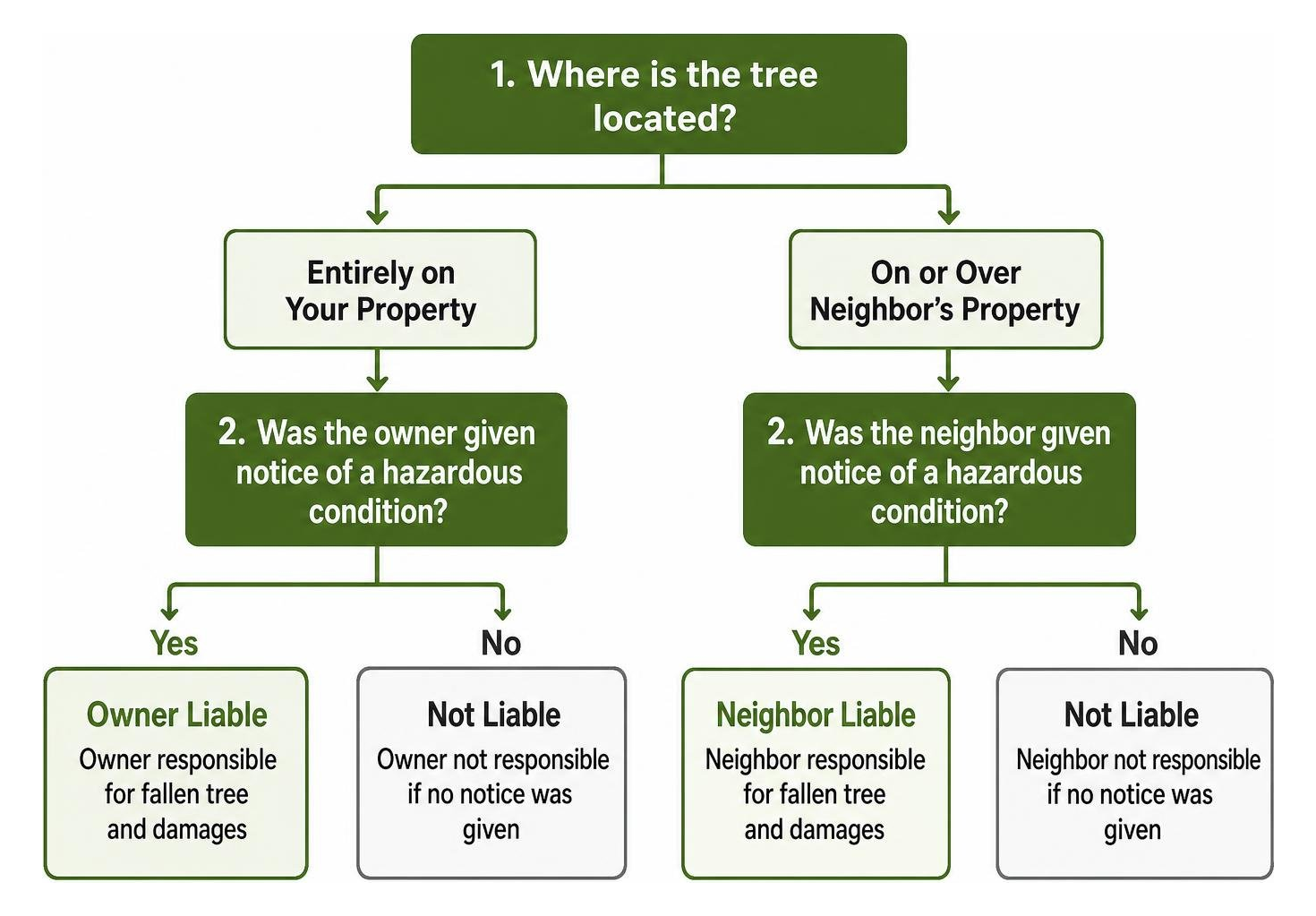
When a dead tree falls, dead tree removal responsibility generally rests with the owner of the property where the trunk was located—but only if that owner knew, or reasonably should have known, the tree was dead or hazardous. If a healthy tree falls during a sudden storm, the owner of the damaged property usually files a claim with their own insurance. If a visibly dead or decaying tree falls after the owner was notified of the hazard, the tree owner is typically liable for cleanup and repairs.
When a massive branch crashes through a roof or crushes a boundary fence after a severe storm, the immediate aftermath brings panic, confusion, and awkward conversations over property lines. Trees are among our most valuable natural assets—in a 50-year life, a single tree can provide over $160,000 of ecological benefits, and a mature landscape specimen may be worth tens of thousands of dollars. Yet, when decay sets in, that majestic asset rapidly transforms into an unstable liability.
Navigating property boundaries, structural damage, and financial obligations requires understanding state property statutes, municipal codes, and insurance regulations. Establishing dead tree removal responsibility is the critical first step in determining who pays for cleanup and repairs when gravity inevitably takes over.
Legal Framework: Dead Tree Removal Responsibility and the Trunk Rule
Understanding the Trunk Rule in Property Law
Under American property law and established state statutes, tree ownership is governed by a fundamental legal standard known as the “trunk rule.” This doctrine dictates that the ownership of a tree—along with the primary responsibility for its ongoing maintenance—belongs strictly to the person on whose land the base of the trunk emerges from the ground.
Canopy spread, overhanging branches, and subterranean root systems do not establish property boundaries. Even if 80% of a massive oak’s branches extend across your yard and hover menacingly above your garage, the tree belongs entirely to your neighbor if the main trunk sits wholly on their parcel. As outlined in The Rights and Responsibilities of Tree Ownership, property boundaries dictate where primary ownership begins and ends. The physical location of that trunk dictates who holds the initial legal duty to care for the tree.
Establishing Dead Tree Removal Responsibility: Healthy Trees vs. Known Hazards
The central question in any fallen tree dispute comes down to tree health: was the collapse an unforeseeable natural event, or was it the result of actionable negligence?
When a vigorous, healthy green tree topples due to unexpected severe weather, tornadic winds, or an ice storm, the law generally classifies the incident as an “Act of God.” In these situations, the owner of the property where the tree stood is rarely held legally negligent. Instead, the owner of whatever parcel the tree landed on must file a claim with their own insurance carrier to clean up the debris and fix damaged structures.
The legal standard shifts entirely when a tree is visibly dead, rotted, or structurally compromised prior to the failure. If a property owner allows a hazardous tree to stand—exhibiting obvious signs of decline such as mushroom conks, hollow bark cavities, extensive dieback, or fungal brackets—they have breached their legal duty of reasonable care. Property owners must take time assessing if a leaning tree can be saved rather than ignoring obvious instability. Ignoring these warning signs is among the top reasons to remove a hazardous tree before severe property damage occurs.
Under standard tort law, if an owner knows (or reasonably should have known) that their dead tree posed an imminent danger to adjoining properties, they are guilty of negligence. Consequently, the tree owner becomes legally and financially responsible for all resulting property damage, emergency cleanup, and hauling expenses.
Boundary Trees and Shared Ownership Liabilities
What happens when a tree grows directly on the property line? Known legally as a “boundary tree” or “line tree,” a specimen whose trunk straddles the boundary line between two properties is considered common property owned jointly by both adjoining landowners as tenants in common.
Under this co-ownership framework:
- Neither neighbor may cut down, heavily prune, or alter the tree in a way that causes permanent injury without the other’s express mutual consent.
- Both property owners share equal legal responsibility for general maintenance, hazard mitigation, and removal costs.
- If a boundary tree dies or becomes structurally hazardous, both owners must coordinate and share the financial duty to eliminate the hazard before it falls.
How Homeowners Insurance Handles Fallen and Decaying Trees
Storm Damage vs. Pre-Existing Decay
Homeowners insurance policies are designed to protect against sudden, accidental, and unforeseen perils. When a severe windstorm fells a tree onto an insured structure, the homeowner’s carrier typically covers the cost of structural repairs and the debris removal required to clear the building.
However, standard policies contain explicit exclusions for gradual deterioration, wear and tear, and neglected maintenance. If an insurer conducts a forensic investigation and discovers that a fallen tree was completely dead for years—riddled with dry rot, fungal decay, or insect infestations that the policyholder ignored—the carrier may deny coverage for the debris removal. In severe storm events, navigating emergency tree removal quickly is essential to mitigate secondary water intrusion and structural collapse.
Coverage Limits and Deductibles
Homeowners frequently misunderstand the strict limitations written into their property casualty policies regarding fallen timber. When a tree falls safely on an open lawn without striking an insured structure, many standard policies provide zero coverage for cutting and hauling it away.
Furthermore, policy provisions often cap tree-related claims. Many insurance policies provide coverage for trees limited to $500 per tree with a maximum total coverage of 5% of the dwelling limit, leaving homeowners with significant out-of-pocket expenses when dealing with massive trunk sections.
| Tree Condition Prior to Fall | Cause of Fall | Primary Responsible Party | Standard Insurance Response | Typical Policy Limits / Caps |
|---|---|---|---|---|
| Healthy & Well-Maintained | Sudden Storm / Act of God | Damaged property owner | Covered under damaged owner’s policy | Structure covered; debris capped (often $500–$1,000) |
| Dead / Visibly Decaying (Owner Warned) | Wind / Decay Failure | Tree owner (Negligence) | Tree owner’s insurer (via subrogation) | Full property liability limits apply |
| Dead / Decaying (No Warnings) | Natural Collapse | Damaged property owner / Dispute | Damaged owner’s policy (may contest decay) | Limited tree debris allowance; structure covered |
| Boundary Line Tree | Storm or Decay | Shared (Both owners) | Split between respective property policies | Subject to individual policy limits & deductibles |
Municipal Ordinances, Public Rights-of-Way, and Township Laws
Municipal Authority and Dead Tree Removal Responsibility on Private Property
Local governments maintain broad police powers to protect public safety, health, and welfare. When a dead or diseased tree on private property threatens public roadways, adjacent sidewalks, or neighboring structures, municipal codes allow local code enforcement agencies to step in.
Dead, dying, or beetle-infested trees are routinely classified as public nuisances under local legislation. For example, under the Greenville dead or diseased tree removal ordinance, property owners must remove dead or diseased trees within 30 days after the date of service of notice. Similarly, under the Rochester standing dead tree regulations, high-risk trees marked with an Orange ‘X’ must be removed within 20 days from the date printed on the notice. If an owner ignores these deadlines, the city contracts a professional crew to eliminate the hazard, and property owners are billed for removal costs plus an administrative fee.
The Tree Lawn and Public Roadway Right-of-Way
The strip of land located between a public sidewalk and the roadway curb—often referred to as the “tree lawn,” “boulevard,” or “curb strip”—presents unique jurisdictional questions. While the underlying real estate is frequently owned by the abutting private homeowner, the municipality or township retains a dedicated public right-of-way easement across it.
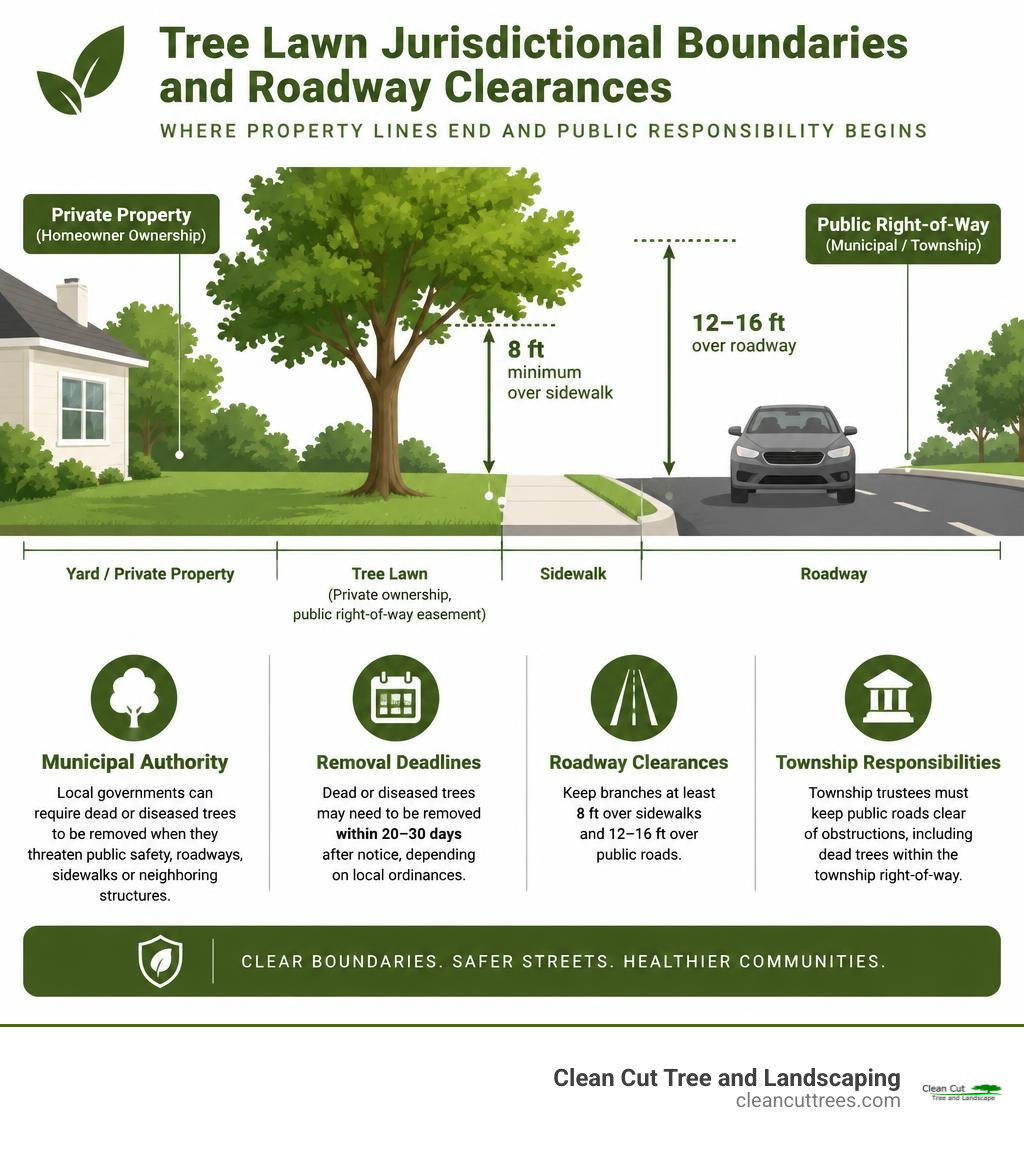
In urban settings, municipal authorities typically regulate tree lawn maintenance to preserve clear lines of sight and safe pedestrian passage. Property owners should review the legal responsibility for tree removal based on location to understand where municipal duties take over. In general, municipalities require overhanging branches to maintain vertical clearances of at least 8 feet over public sidewalks and 12 to 16 feet over public roads.
Townships vs. Municipal Corporations in Ohio
State legal structures, particularly within the Ohio Revised Code, draw sharp distinctions between unincorporated townships and incorporated municipal corporations:
- Township Trustees: Under state law, township trustees bear a statutory duty to keep public roads clear of obstructions. The formal duties of township trustees regarding roadway hazards require townships to remove dead trees situated within the township road right-of-way that threaten vehicular traffic.
- Municipal Corporations: Incorporated cities and villages possess broader regulatory powers. Municipalities can mandate tree maintenance, prune hazardous branches, or remove diseased private trees that endanger public spaces, subsequently assessing the full removal cost directly onto the offending landowner’s property tax bill.
How to Document a Neighbor’s Hazardous Tree and Protect Your Property
Essential Evidence: Arborist Reports, Photos, and Certified Mail
If your neighbor has a dead or structurally compromised tree looming over your roof, taking casual fence-line photos is not enough. You must establish a clear, legally admissible paper trail proving that the owner had actual notice of the hazard.
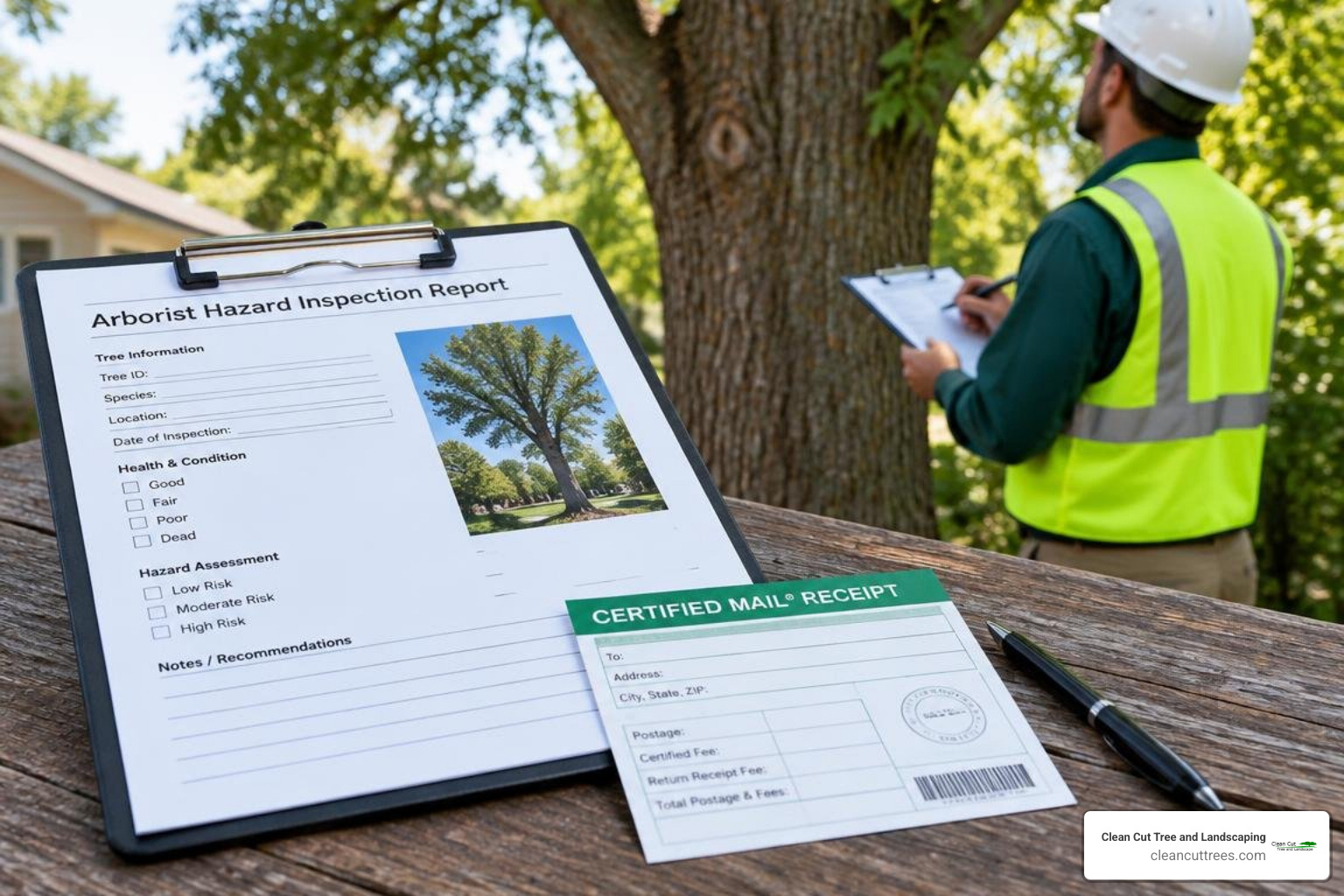
- Obtain an Independent Risk Assessment: Hire an ISA-Certified Arborist to inspect the tree from your property line. The importance of professional tree inspections cannot be overstated, as an arborist provides an objective hazard evaluation documenting structural defects, rot, and failure probability.
- Collect High-Resolution Photographic Proof: Take clear, date-stamped photographs showing visible decay, cavities, bark loss, or fungal brackets, proving that the dead tree needs immediate removal.
- Send Formal Written Notice via Certified Mail: Draft a polite, factual letter detailing the hazard. Attach the arborist’s report and photographs, and send the packet via Certified Mail with Return Receipt Requested.
Once your neighbor signs for that certified letter, their legal shield of “I didn’t know it was dangerous” is broken. If that tree later collapses, your insurance carrier can easily subrogate the claim against your neighbor’s insurer based on proven negligence.
Legal Remedies When a Neighbor Refuses Removal
If your neighbor ignores your certified notice, you have several formal legal avenues:
- Contact Local Code Enforcement: Request an inspection by your city forester or building department to issue a formal municipal nuisance abatement citation.
- Exercise Self-Help Trimming Rights: Under common law, you have the right to trim branches that cross over your property line, provided you cut strictly at the boundary line without entering their property or damaging the structural stability of the tree.
- File a Nuisance Abatement Injunction: Retain legal counsel to petition a court for an injunction compelling the owner to remove the dangerous private nuisance before catastrophe strikes.
Professional Assessment and Cost Expectations for Dead Tree Removal
Dead Tree Removal Costs and Complexity Factors
Removing a standing dead tree involves high mechanical complexity. Tree services do not use flat-rate pricing models; instead, removal operations depend entirely on site-specific physical parameters.
Factors that determine project scope and operational resources include:
- Tree Dimensions: Height, canopy spread, and trunk diameter directly influence equipment size.
- Structural Integrity: Advanced decay limits the ability of arborists to climb the trunk safely.
- Drop Zone Clearance: Proximity to structures, utility lines, and delicate features necessitates precision rigging.
When budgeting for safety, exploring dead tree removal costs by size and species and properly evaluating tree removal quotes helps homeowners choose fully insured, qualified professionals equipped with modern machinery.
Why Dead Trees Require Specialized Removal Techniques
Dead trees behave unpredictably. As wood dries and decomposes, it loses its cellular elasticity, becoming extremely brittle. Standard climbing techniques and conventional lowering ropes can cause rotted trunk wood to snap without warning.
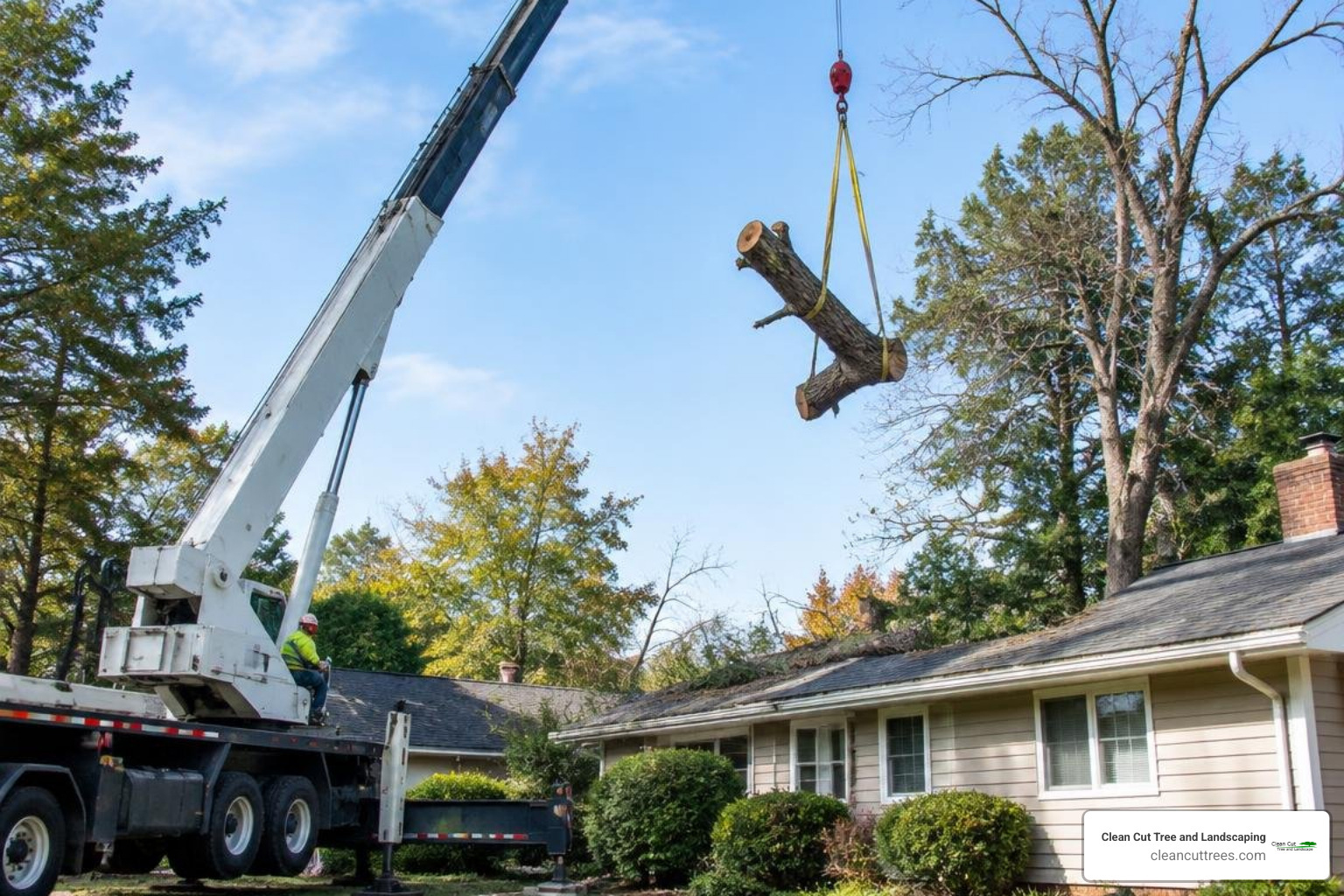
Particularly in cases of severe pest infestations—such as mandatory emerald ash borer tree removal—trees rot rapidly from the inside out. Handling these high-risk jobs requires specialized equipment, including cranes, articulated bucket lifts, and heavy-duty rigging gear. Knowing the essential criteria when hiring a tree removal service ensures your property is protected by licensed, certified arborists trained to safely dismantle dead timber in tight urban spaces.
Frequently Asked Questions About Tree Liability
Who pays if a neighbor’s dead tree falls on my fence?
If the neighbor was previously notified in writing of the dead tree’s hazardous condition, their negligence makes them legally responsible for replacing your fence and clearing the debris. If no prior notice existed and the decay was not obvious, you must file a claim through your own homeowners insurance policy, after which your insurer may attempt subrogation against the neighbor.
Can I trim branches from a dead tree hanging over my property line?
Yes. Under the common-law rule of self-help, you have the legal right to trim branches and roots that encroach onto your property up to the boundary line. However, you cannot cross the property boundary without permission, and you must not trim in a manner that destabilizes or destroys the tree.
Does homeowners insurance cover the removal of a dead tree that hasn’t fallen yet?
No. Homeowners insurance policies exclude standard home and property maintenance. Insurers expect property owners to proactively mitigate known hazards out of pocket before they cause structural damage.
Conclusion: Taking Action Before the Next Storm
Waiting for a dead, rotted tree to collapse in high winds is a gamble that risks severe structural damage, personal injury, and bitter neighbor disputes. Proactive tree inspections and timely removal protect your home’s value and shield you from legal liability.
Our certified arborists utilize specialized rigging gear and heavy crane equipment to safely dismantle large, hazardous, and decaying trees in the tightest locations across Greater Cincinnati. If you have an unstable or dead tree threatening your home, protect your property today by scheduling a professional tree removal service before the next severe weather event hits.