
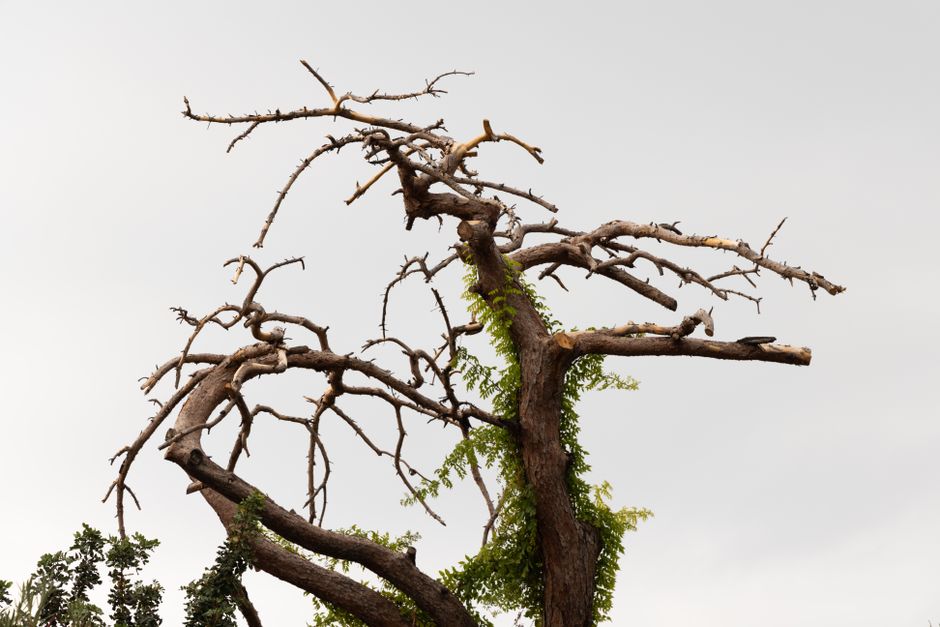
Understanding Dead Tree Removal
The removal of a dead tree depends far more on risk and access than on the tree alone. For a quick quote comparison, look for clear details on the tree’s height, level of decay, distance from your home or power lines, equipment needs, cleanup, and whether stump work is included.
A dead tree can look simple to remove, but brittle limbs, hidden trunk rot, and unstable roots can make each cut less predictable. That is especially true for dead pines near homes, fences, roads, or utility lines. A complete estimate should explain how the crew plans to remove the tree safely, not just what work is listed.
For Greater Cincinnati homeowners, the best quotes are detailed, written, and based on an in-person inspection. They should separate the main removal work from possible extras such as stump grinding, hauling, chipping, permits, and emergency response.
We are The SEO Team, and this guide will help you compare removal quotes with safety, scope, and cleanup in mind.
Identifying Signs of a Dead, Dying, or Hazardous Tree

Before evaluating any service quote, it is vital to recognize when a tree has reached a critical stage. Recognizing early warnings allows property owners to plan work proactively rather than dealing with catastrophic property damage after a storm.
When a tree begins to fail, physical indicators become noticeable upon visual inspection. Bark peeling away in large sheets, persistent bracket fungi growing near the base, hollow cavities inside the main trunk, or significant pest infestations (such as emerald ash borer damage or pine beetle exit holes) all indicate structural compromise. Additionally, if more than 25 percent of a tree’s canopy exhibits leafless, brittle branches, the specimen is actively dying.
When a tree dead needs removed, waiting too long often complicates the job. Seasonal freezes exacerbate hidden vulnerabilities; knowing how to spot and address winter tree damage before it’s too late helps prevent sudden, unplanned removals when weather conditions worsen.
Dangers of Brittle Dead Wood vs. Healthy Trees
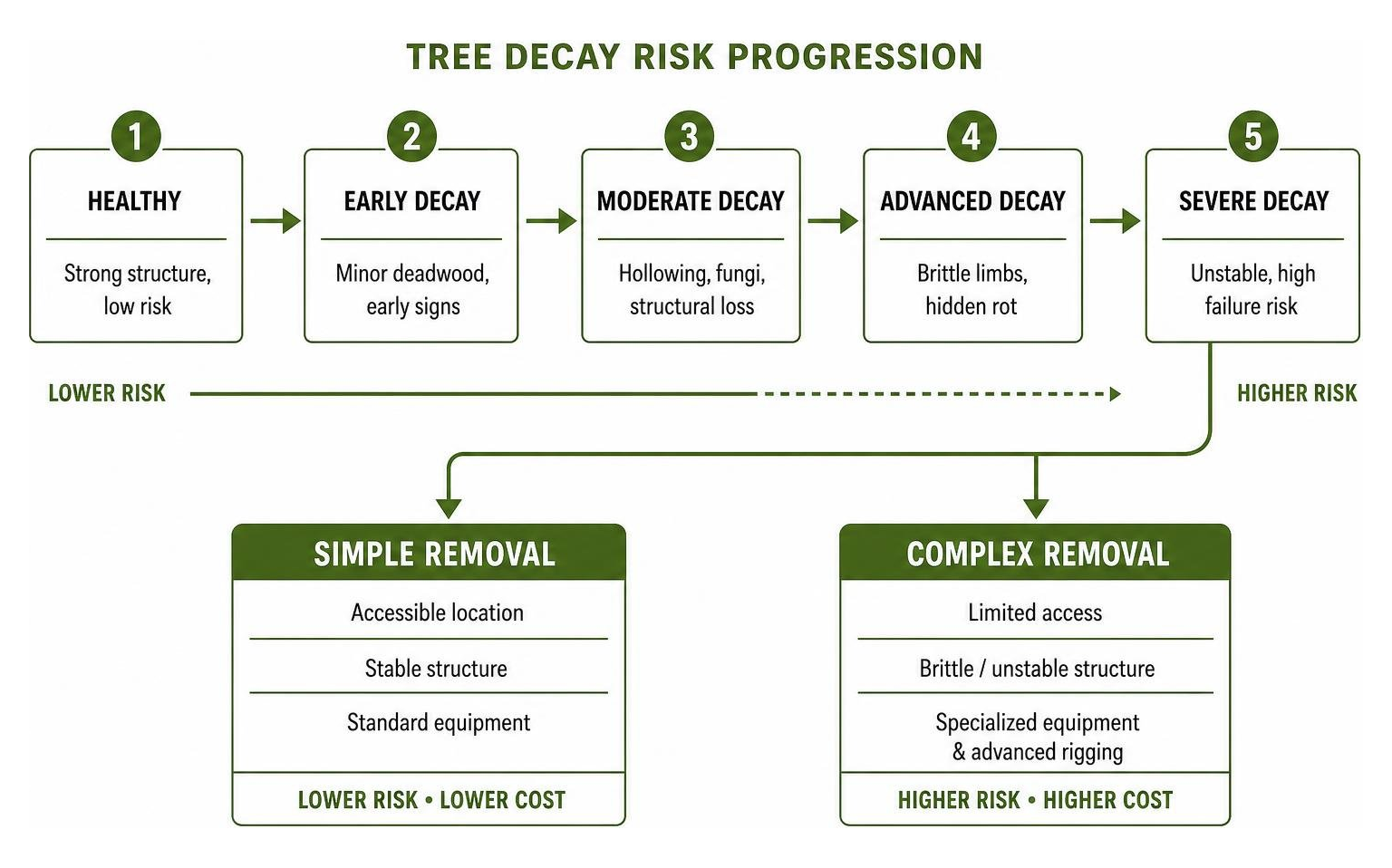
Removing a living tree is generally straightforward for experienced climbers because healthy wood bends under tension and holds rigging hardware securely. In contrast, dead trees lose moisture rapidly, rendering the timber brittle and prone to sudden snapping under heavy loads.
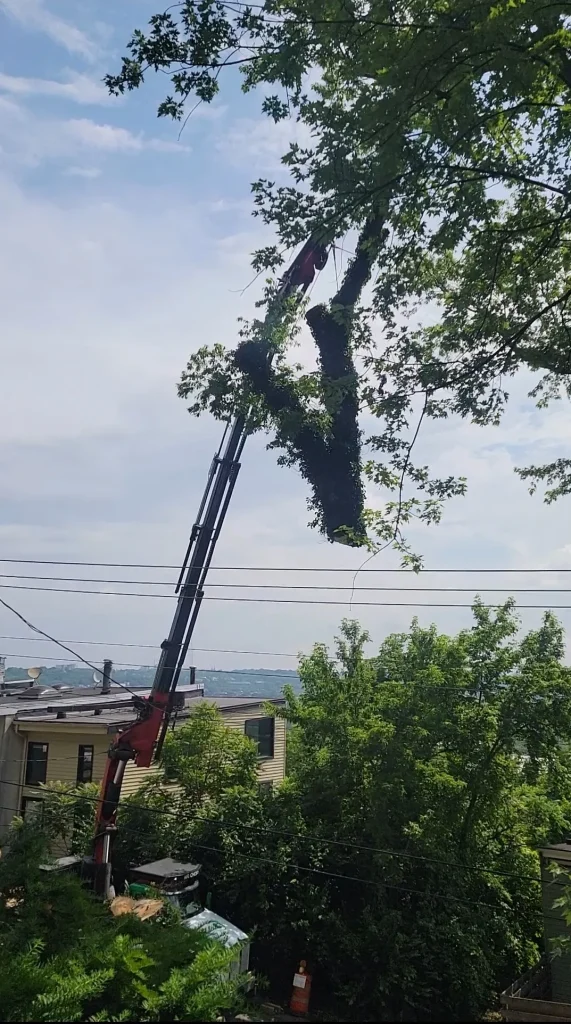
When timber loses internal elasticity, traditional climbing techniques become unsafe. Tree care professionals cannot safely anchor lines to dead branches, as structural integrity may be compromised internally even if the exterior bark looks intact. Consequently, removing dead pines or hardwoods often demands specialized rigging equipment, bucket trucks, or aerial cranes. Prioritizing safety during seasonal work is vital, which is why adhering to strict tree removal safety for the summer protocols protects both crew members and home property.
Recognizing Emergency Tree Hazards
Certain situations demand immediate professional intervention. A standing dead tree situated in an open field presents minimal risk, but the moment structural failure threatens lives or property, standard removal transforms into an urgent priority.
Key signs of an impending emergency include:
- A sudden or progressive lean exceeding 15 degrees from vertical, signaling root anchorage failure.
- Major horizontal or vertical trunk cracks extending along a substantial portion of the stem.
- Exposed root systems exhibiting severe decay, rot, or soil heaving following heavy rain.
- Large dead branches suspended directly above rooflines, driveways, or active walkways.
- Brittle pine trees coming into close proximity or contact with overhead utility cables.
When these conditions align, seeking qualified emergency tree services immediately is necessary to stabilize the site and mitigate imminent danger before storm winds complete the tree’s collapse.
Key Factors Driving Dead Tree Removal Estimates
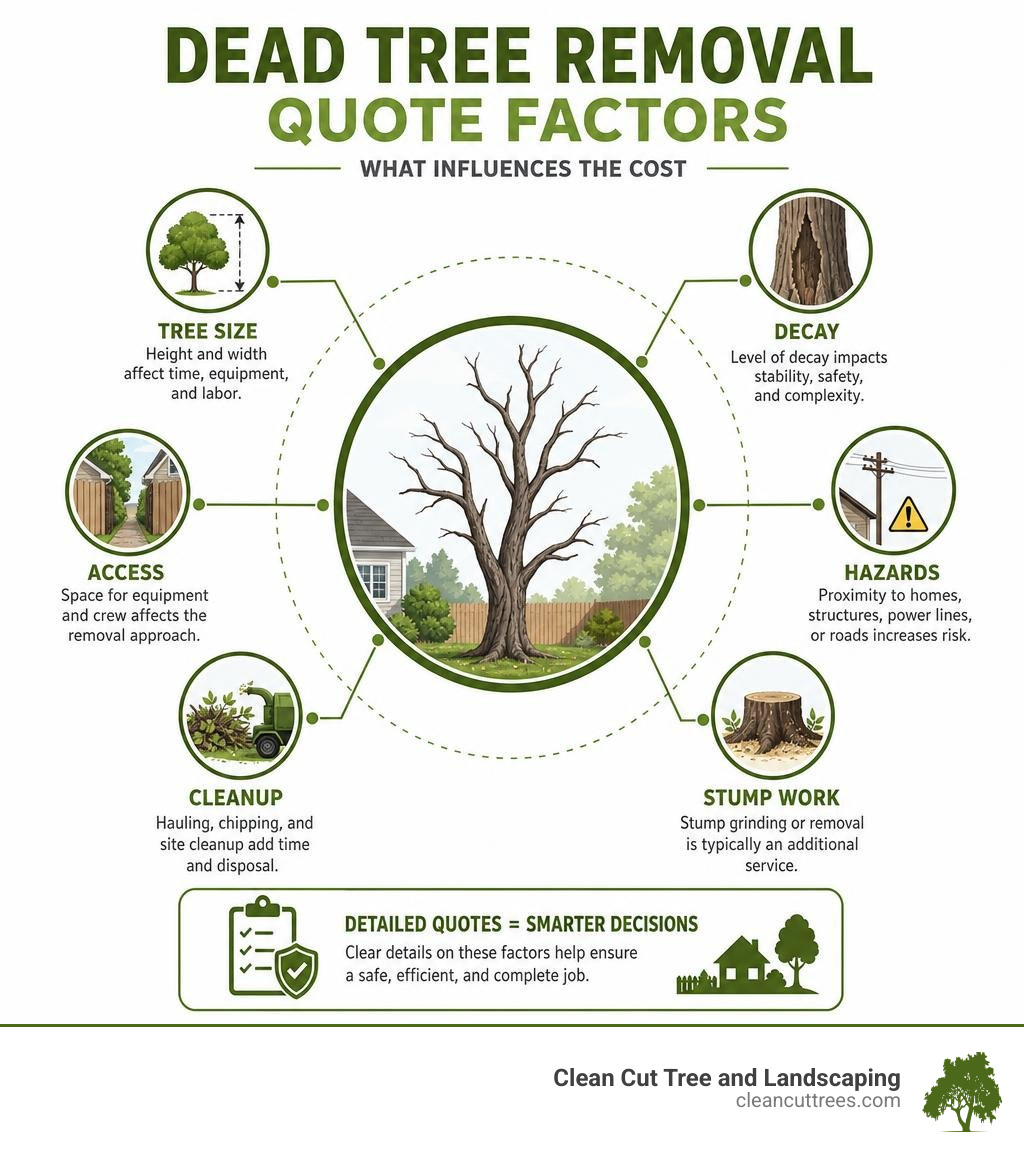
Understanding why estimates vary requires examining the primary technical variables that shape a contractor’s quote. Every property presents unique physical challenges, meaning baseline project models must adjust for specific operational risks. Homeowners reviewing estimates can reference general industry benchmarks like the Dead Tree Removal Guide 2026 — (US Avg) or read through a comprehensive overview like Tree Removal Planning Guide (2026 Guide) to see how project variables shape final figures nationwide.
How Tree Height Impacts Dead Tree Removal
Tree size serves as a foundational variable in quote calculation because height directly correlates with the overall volume of timber, total labor hours, and heavy equipment requirements.
- Small Trees: Saplings or low-growing trees require minimal rigging, standard chainsaws, and smaller ground crews, resulting in basic baseline quotes.
- Medium Trees: Specimens reaching mid-tier heights demand intermediate rigging, controlled branch lowering, and moderate ground support to clear debris safely.
- Large Trees: Tall mature trees require advanced aerial rigging, heavy-duty wood chippers, multiple ground technicians, and extended labor windows.
- Extra-Large Trees: Massive trees reaching towering heights routinely necessitate crane access to lift heavy timber sections over structures safely.
As height increases, so does the mechanical force of falling wood. Equipment overhead directly reflects the elevated danger and precision required to execute large-scale removals.
Location, Accessibility, and Proximity Hazards
A tree’s location often influences job complexity more than its sheer physical size. An open yard allows crews to drop limbs quickly using gravity. However, urban or suburban properties in Greater Cincinnati frequently feature tight spaces between homes, historic structures, or power infrastructure.
When tree limbs overhang property lines, sunrooms, or high-voltage utility lines, crews must meticulously piece the tree down from top to bottom. Each cut branch must be tied off with lowering ropes, lowered slowly, and carried out through narrow access points. Restricted gate access that prevents mechanical loaders from reaching the work site forces crews to transport heavy log sections manually, significantly raising labor hours. Utilizing professional, fully insured tree removal services ensures that high-risk removals near structures are executed cleanly without property damage.
Evaluating Add-On Services and Extra Scope in Estimates
When reviewing competing quotes, property owners must check whether the provided figure represents a complete end-to-end solution or merely basic tree felling. Many standard proposals cover taking the tree down to a low stump and leaving wood on-site, leaving supplemental tasks itemized separately.
| Removal Phase / Service | Included in Standard Scope? | Notes & Scope Expectations |
|---|---|---|
| Tree Felling & Sectioning | Yes | Cutting the tree down to a low-lying stump. |
| Basic Limb Chipping | Varies | Processing smaller branches through a chipper; verify on quote. |
| Log Hauling & Disposal | Optional / Extra | Transporting large trunk logs off the property. |
| Stump Grinding | Extra | Mechanically grinding the remaining stump below soil level. |
| Debris & Root Fill | Extra | Backfilling the ground cavity with topsoil or removing excess mulch. |
| Municipal Permits | Extra | Obtaining city tree work permits or arborist evaluations where required. |
Managing Dead Tree Removal Scope with Add-On Services
Post-removal services can be tailored based on your long-term goals for the property. Eliminating the remaining stump is a prime example of an add-on service that protects landscaping aesthetics while eliminating pest habitats.
Leaving a dead tree stump behind creates an ideal breeding ground for termites, carpenter ants, and wood-decaying fungi. Opting for specialized stump grinding service grinds the residual wood 6 to 8 inches below grade, allowing lawn turf to regrow seamlessly. For complete subterranean clearing prior to new construction or replanting, professional tree stump removal extracts the primary root ball entirely, providing a completely clean slate for future landscaping projects.
Insurance Coverage Limits and Municipal Permits
A common question among property owners is whether insurance will absorb dead tree expenses. Homeowners insurance policies generally view routine tree maintenance—including taking down standing dead trees—as the owner’s responsibility. Standard policies typically only assist with claims when a dead tree falls during a storm event and causes direct damage to a covered structure like a home, garage, or fence.
Furthermore, local municipal regulations across Greater Cincinnati may require formal permits before taking down trees that exceed specific diameter limits or belong to protected urban forestry zones. In such cases, hiring a certified arborist to inspect structural integrity and generate an official report ensures full compliance with local ordinances, preventing unpermitted removal penalties.
Proven Strategies for Saving Money on Tree Removal
While professional dead tree removal requires specialized skills and heavy equipment, property owners can employ strategic planning methods to manage project investments effectively without sacrificing work safety or quality.
Off-Season Timing and Contractor Discounts
Tree service demand follows distinct seasonal cycles. Spring and summer mark peak operational periods, as seasonal storms and active landscaping projects create high service volume. Conversely, late fall and winter represent the industry’s off-peak season.
Scheduling work during winter months offers several distinct operational advantages:
- Lower Contractor Demand: Crews often have higher availability, allowing for flexible scheduling.
- Dormant Ground Conditions: Frozen ground protects surrounding lawn turf from heavy machinery tire tracks.
- Improved Sightlines: Deciduous trees drop their leaves, offering clear visibility of dead branch structures and structural attachment points.
Strategic scheduling lets property owners explore opportunities to save money on your tree removal project this winter. Learning the operational rhythms around the best tree removal service time remove tree can stretch project budgets significantly while securing prompt appointment slots.
To ensure you choose a qualified professional, it is essential to review the top 10 things need know hiring tree service, such as verifying licensing, confirming active worker compensation, and requesting written scope agreements.
Self-Service Debris Management and Firewood Offsets
Another effective way to manage total removal expenditure involves taking over post-cut debris management. A substantial portion of tree work labor goes into cutting timber into small pieces, hauling logs to disposal trucks, and processing wood waste off-site.
Homeowners equipped with wood stoves or fireplaces can request that crews cut the trunk into manageable, firewood-sized logs and leave them stacked on-site. By handling log splitting, brush clearing, or mulch distribution independently, property owners eliminate haul-away fees, retaining valuable natural firewood for home heating.
Frequently Asked Questions About Dead Tree Removal
Is dead tree removal covered by homeowners insurance?
Homeowners insurance generally covers tree removal only if a fallen tree damages a covered structure on your property, such as a roof, detached garage, or perimeter fence, as the result of a sudden storm or act of nature. Insurance policies explicitly exclude routine preventative maintenance. If a dead tree remains standing on your property for an extended period without being removed and eventually falls due to rot, the insurance adjuster may deny the claim on the grounds of owner neglect. Proactive maintenance remains the financial responsibility of the property owner.
Why is removing a dead pine tree near power lines more expensive?
Dead pine trees situated near high-voltage power cables introduce severe electrical and structural hazards that require specialized operational protocols. Pine wood contains volatile resins and loses structural stability quickly once dead, making limbs highly unpredictable when cut.
Working within proximity of live utility lines requires certified utility-line clearance arborists who utilize specialized non-conductive fiberglass bucket trucks, dedicated rigging gear, and coordinated safety protocols with local utility providers. Managing power line risks demands higher insurance premiums, specialized crew certifications, and extended execution timelines, reflecting the strict safety standards required for high-risk aerial environments.
What is the national expectation for dead tree removal in 2026?
Because dead tree projects vary dramatically based on location, access, decay levels, and equipment demands, standard industry figures span a broad spectrum depending on job parameters. Homeowners interested in exploring nationwide estimator tools can review the Tree Removal Assessment Calculator (2026) | HomeCostCalc or read the Guide to Tree Removal: Services and Budgeting – D and G Flooring to see regional project factors. To see how regional labor markets influence project scope, property owners can consult resources like Tree Removal in Denver, CO | Angi. Across all regions, the key driver remains project risk rather than geographic location alone.
Conclusion
Comparing quotes for dead tree and dead pine removal requires looking beyond a single bottom-line figure. Evaluating the thoroughness of the site evaluation, the safety standards of the crew, equipment specifications, and included cleanup terms ensures your property remains protected throughout the operation. Dead tree removals involve inherent structural risks, making certified arborist expertise and comprehensive liability coverage essential requirements for any contractor you select.
At Clean Cut Tree and Landscaping, we specialize in executing high-risk, technical tree removals across Greater Cincinnati and Northern Kentucky. Whether you are dealing with a brittle dead pine leaning over your home or require specialized crane-assisted operations in tight residential spaces, our certified team handles every job with precision, efficiency, and safety.
Protect your property today by scheduling a professional evaluation with our experienced team. Visit our comprehensive Tree Removal Service page to request your detailed, written estimate!