
What Determines the Effort to Remove a Dead Tree?
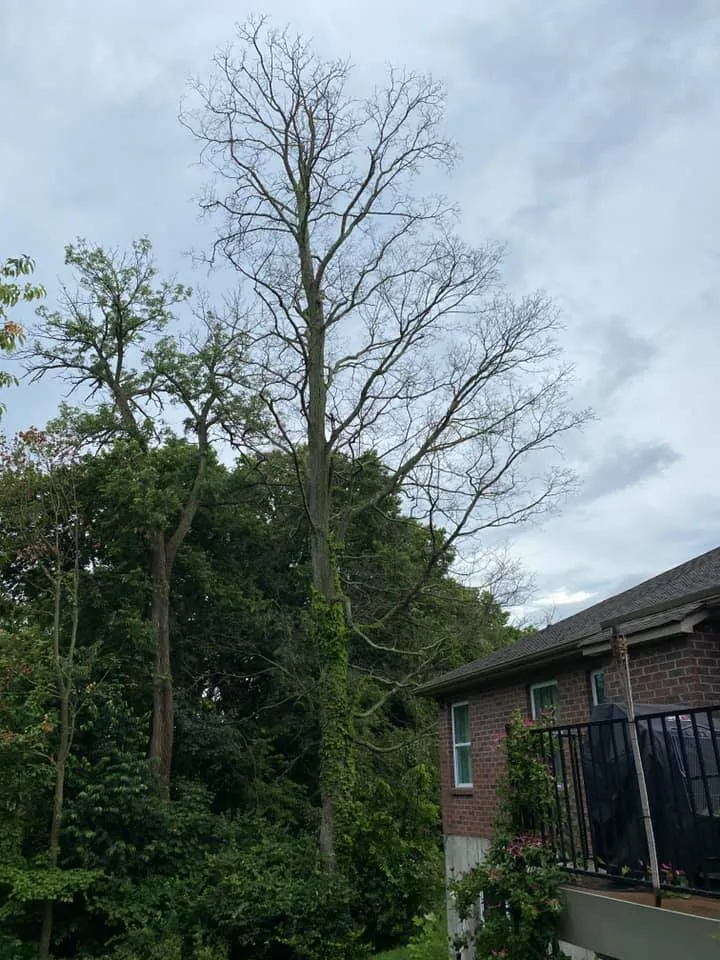
The effort to remove a dead tree depends far more on risk and complexity than on the tree simply being dead. A small, open-yard tree is very different from a tall, brittle oak leaning over a Cincinnati home, fence, driveway, or power line.
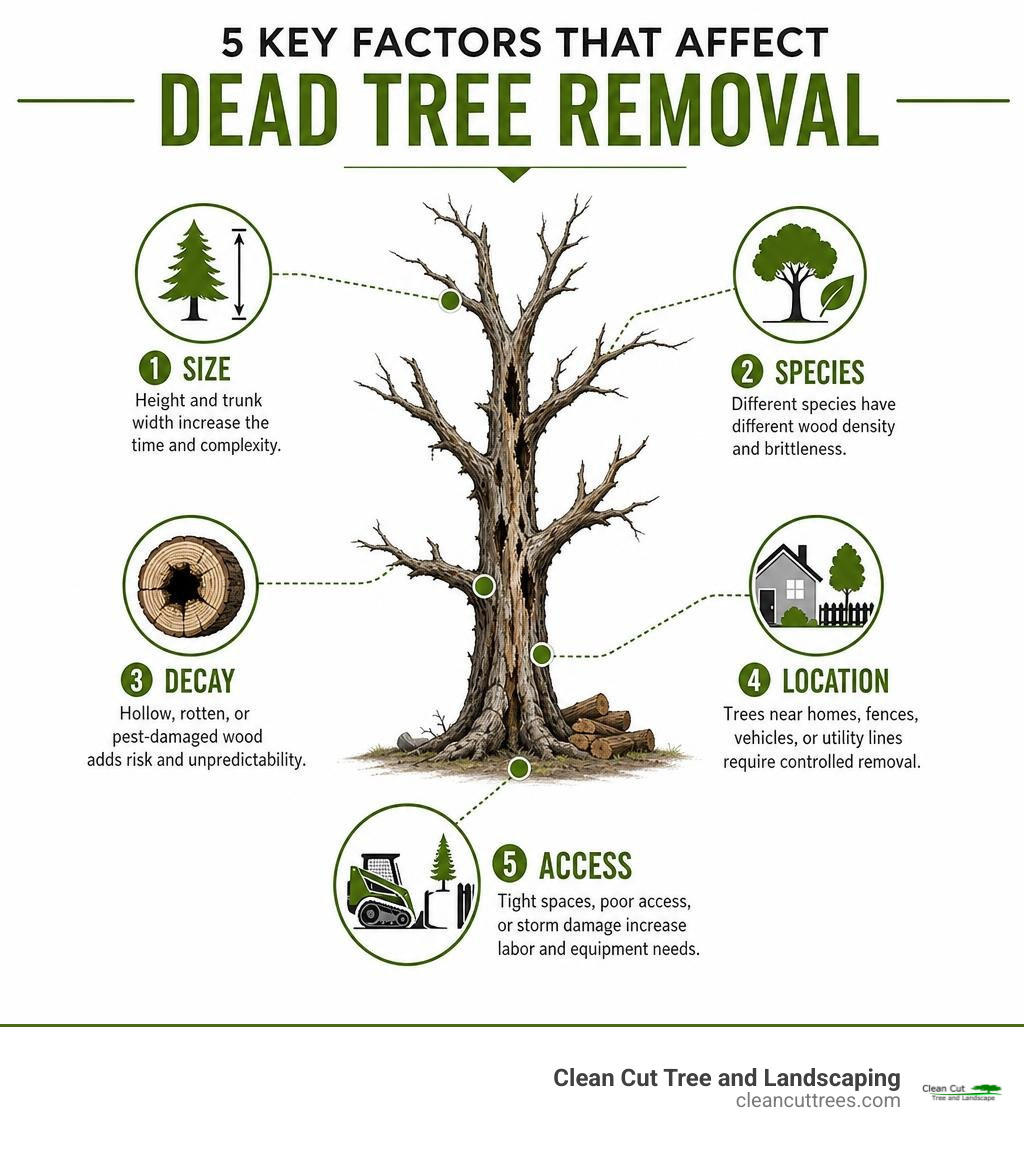
The quickest way to understand the job is to look at these four factors:
| Main factor | Why it matters |
|---|---|
| Tree height and trunk width | Larger trees create more cutting, lowering, and cleanup work. |
| Species and wood condition | Brittle, hollow, rotten, or pest-damaged wood can make each cut less predictable. |
| Location | Trees near homes, vehicles, fences, or utility lines require controlled removal. |
| Access and urgency | Tight yards, poor equipment access, storm damage, and same day tree removal can make the work more involved. |
Dead trees can look stable from the ground while having hidden trunk rot or weak limbs overhead. That is why a professional assessment matters before anyone starts cutting. This guide breaks down the factors that shape a dead-tree removal estimate, including size, species, decay, access, cleanup, and common add-on services.
We are Clean Cut Tree and Landscaping, and next we will look at the main factors that influence a dead-tree removal project.
Factors Influencing Dead Tree Removal
When property owners in the Greater Cincinnati area discover a standing dead tree on their property, the immediate concern is getting it safely down before the next seasonal storm system rolls through the Ohio Valley. Estimating a removal project requires examining a matrix of physical characteristics and site dynamics.
While every property presents unique terrain and obstacles, tree care professionals look at universal physical metrics to evaluate labor demands. The key variables include height, canopy spread, trunk diameter at breast height (DBH), structural decay, and accessibility.

To help visualize how tree dimensions, timber density, and species difficulty correlate with project scope, reference our detailed summary table below:
| Size Tier | Average Height | Common Local Species | Relative Labor & Equipment Scope |
|---|---|---|---|
| Small Trees | Under 30 feet | Dogwood, Japanese Maple, Redbud | Standard crew, light cutting equipment, minimal rigging required. |
| Medium Timber | 30 to 60 feet | Birch, Sweetgum, Callery Pear | Mid-sized crew, bucket truck access, branch-by-branch lowering. |
| Large Trees | 60 to 80 feet | Pin Oak, Sugar Maple, White Ash | Heavy rigging equipment, extended crane support, advanced hazard protocols. |
| Extra-Large Timber | 80 to 100+ feet | Sycamore, Tulip Poplar, Mature Red Oak | Full specialized crew, heavy crane rentals, multi-stage sectional dismantling. |
For broader background on general baseline pricing parameters across different property layouts, review this dead tree removal pricing guide to explore various regional project scenarios.
Tree Size and Height Tiers Impacting Dead Tree Removal
The height and overall mass of a dead tree dictate the duration of the project, crew size, and equipment required. A small tree under 30 feet tall requires significantly fewer cutting passes and lighter rigging gear than a mature hardwood stretching toward the clouds.
- Small Trees (Under 30 Feet): Young ornamental trees, fruit trees, or small saplings that have succumbed to disease generally require simple equipment setups. Crews can often fell these from the ground or take them down in a few quick sectional cuts if nearby garden features need protection.
- Medium Timber (30 to 60 Feet): Trees in this height range, such as birch or ornamental pear, require arborists to elevate themselves using bucket trucks or climb with specialized safety equipment. Each upper limb must be systematically notched, cut, and lowered using guide ropes to protect lawn features below.
- Large Oaks and Hardwoods (60 to 80 Feet): Large shade trees present substantial wood volume. Removing an 80-foot dead oak involves maneuvering hundreds of pounds of dense timber per section. Crews utilize friction brakes, high-capacity rigging lines, and specialized lowering devices to drop heavy timber safely.
- Extra-Large Pines and Poplars (80 to 100+ Feet): Towering trees demand extensive coordination. When timber reaches these heights, standard bucket trucks may not reach the upper canopy, necessitating heavy mobile cranes or advanced remote-controlled grapple saws to safely secure and lower top sections.
How Species and Wood Hardness Affect Dead Tree Removal
Not all dead wood behaves the same under a chainsaw blade or when secured in a lowering harness. The tree species directly dictates timber density, branch architecture, and overall wood integrity after death.
Heavy hardwoods like native White Oak and Sugar Maple feature extreme fiber density. Even after dying, oak wood remains dense and heavy, requiring heavy-duty chainsaws, frequent blade sharpening, and high-capacity rigging equipment. The sheer weight of dense hardwood limbs extends the labor time required to lower every cut piece safely.
Conversely, softwoods like Eastern White Pine or brittle deciduous trees like Silver Maple and Callery Pear introduce structural risks. Pines decay rapidly once dead, softening top limbs and making them prone to snapping under tension. Silver maples feature heavy, spreading branch canopies with brittle wood fibers that break unpredictably during removal.
Additionally, invasive pests have impacted millions of trees across Ohio. The Emerald Ash Borer (EAB) has devastated native Ash tree populations. Dead ash trees dry out rapidly, becoming extremely brittle within months of dying. The wood can shatter unexpectedly upon impact, meaning climbers cannot safely tie off on upper branches. Removal of EAB-killed ash trees requires specialized bucket truck access or crane equipment to avoid sending climbers into a compromised canopy.
To understand how species attributes and wood mass impact technical equipment selections, consult our detailed resource on tree removal price calculations.
Tree Condition, Hazard Levels, and Rigging Complexity
The physical health and structural stability of a tree at the time of removal are critical safety considerations. Removing a living tree is generally predictable because healthy wood fibers support climbing gear, rigging lines, and directional notches reliably. A dead tree, however, represents a dynamic hazard.
As wood tissue dies, fungal rot sets in, moisture evaporates, and structural integrity degrades. The longer a dead tree stands exposed to moisture and wind, the more hazardous it becomes for crews to take down.
Structural Integrity and Decay Hazards
An essential step in evaluating a dead tree is determining its internal structural soundness. Tree care specialists look for warning signs such as:
- Conks and mushroom brackets growing along the main trunk.
- Severe vertical trunk cracks or deep bark sloughing.
- Hollow centers caused by internal heart rot.
- Dead, leafless upper limbs (“stagheading”) that can drop without warning.
If you suspect your tree is suffering from advanced decline, read our guide on dead tree identification to recognize critical warning signs before structural failure occurs.
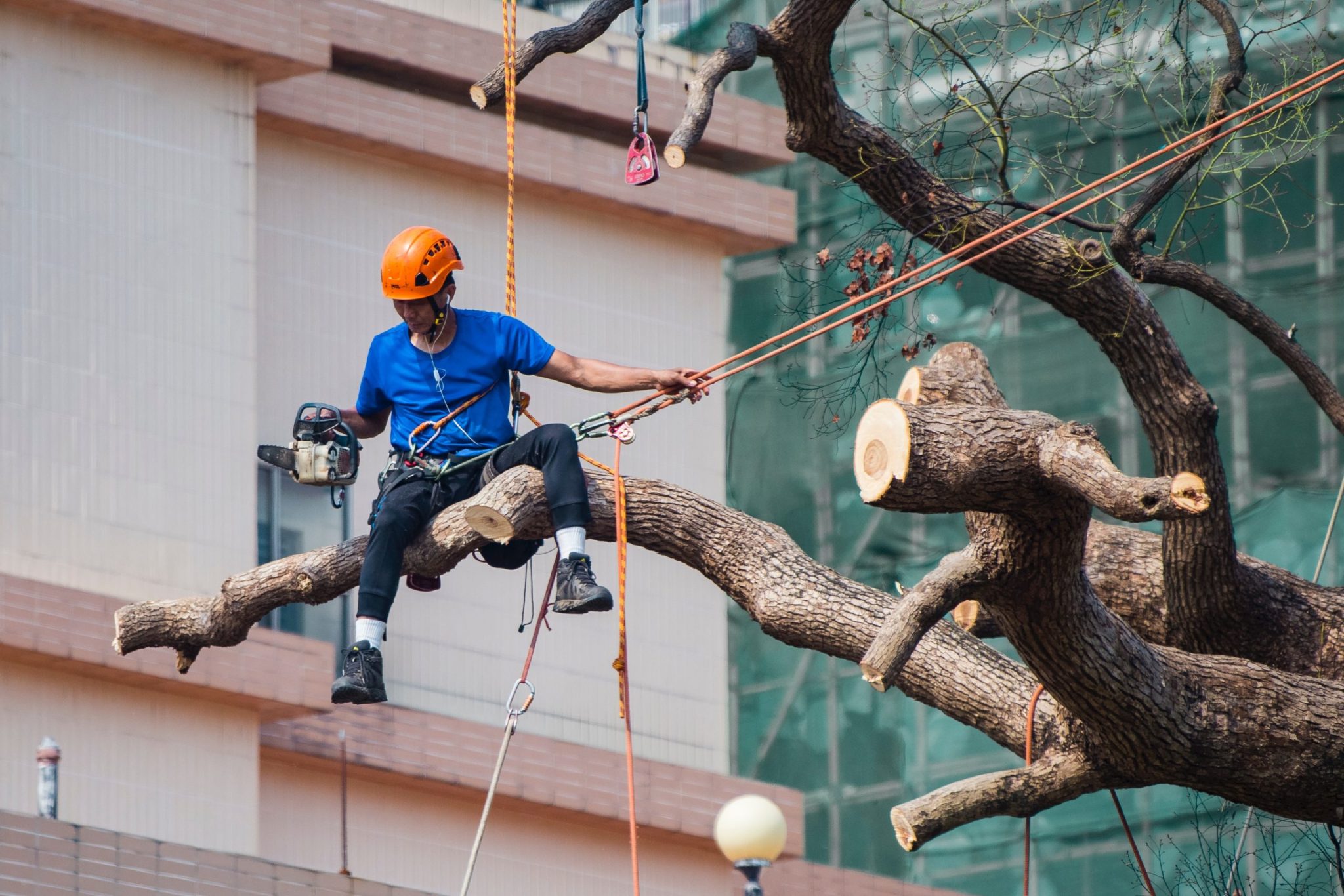
When a tree has internal decay or a hollow trunk, standard climbing protocols are often unsafe. Arborists cannot safely attach climbing lines or anchor lowering blocks to limbs that might snap under load. In these hazardous situations, traditional climbing techniques are set aside in favor of aerial bucket trucks, specialized spider lifts, or mobile cranes. Using specialized mechanical lifts allows workers to cut away limbs from above without placing weight on the compromised tree trunk.
Proximity to Structures and Power Lines
Location is often the primary driver of project complexity. A tall dead tree standing in the center of an open field can frequently be directionally felled in one piece—a fast, straightforward process. However, dead trees located near residential structures require a completely different approach.
When a dead tree overhangs house roofs, detached garages, power lines, outdoor kitchens, or delicate underground septic drain fields, tree workers cannot simply cut and let limbs fall freely. Every individual branch must be carefully rigged with ropes, tied off, cut cleanly, and controlled as it is lowered to the ground.
Working near utility lines adds further safety requirements. High-voltage power lines require specialized clearance techniques and close coordination with local utility providers. When space is constrained or obstacles line the ground beneath the canopy, crews must utilize mobile crane services. A crane holds the weight of each branch section before the arborist makes the cut, lifting the timber clear over houses or fences and placing it in a designated processing area on the driveway or street.
If severe weather, lightning strikes, or sudden soil movement leaves a unstable dead tree leaning directly toward your home, utilize our specialized emergency tree services for rapid, safe clearance before catastrophic property damage occurs.
Common Add-On Expenses and Budget Strategies
When reviewing an estimate for dead tree management, property owners should understand what services are included in the baseline scope of work and which items are optional add-ons. Standard tree removal typically covers safely cutting down the tree to a stump near ground level and processing the brush. However, secondary property restoration tasks require additional labor and machinery.
Stump Grinding and Root Extraction
Once the main trunk and canopy of a dead tree are removed, the tree stump remains embedded in your lawn. Leaving a dead tree stump behind creates several long-term problems:
- It creates a trip hazard for children and lawnmower blades.
- It attracts wood-boring insects, including carpenter ants and subterranean termites, as the subterranean wood rots.
- It generates unsightly fungal growths and root sprouts.
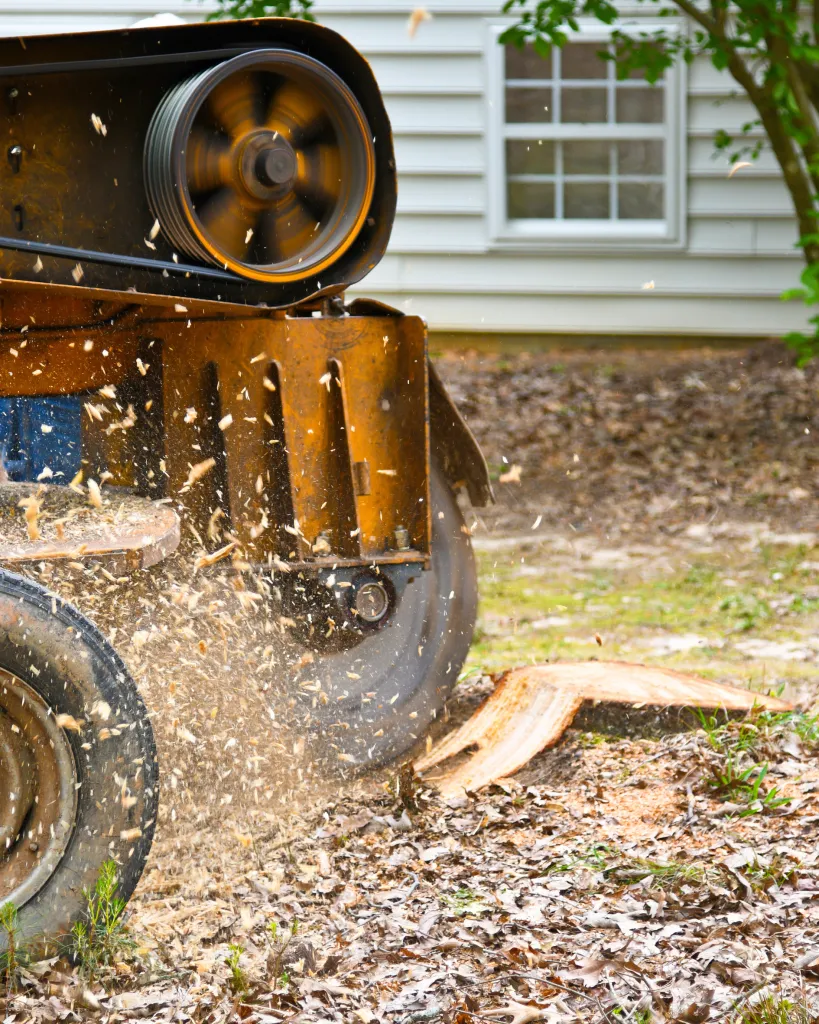
Stump grinding is the most efficient method for eliminating a leftover stump. Specialized stump grinders utilize heavy, high-speed carbide-toothed cutting wheels to pulverize the stump and prominent surface roots into fine wood mulch, driving several inches below ground level.
If you plan to install hardscaping, extend a driveway, or plant a new specimen tree in the exact same spot, full root extraction via mechanical excavation may be required. Full extraction involves digging up the entire underground root ball, which demands heavier equipment and soil restoration work. Once the stump is ground or excavated, topsoil backfilling and grass seeding can restore the lawn smoothly.
Debris Disposal and Off-Season Savings
Processing the large volume of organic waste generated by a mature tree requires dedicated cleanup labor and heavy chippers. A mature oak or maple can easily produce several tons of timber, dense logs, and bulky brush.
Property owners can choose how debris is handled based on their needs and preferences:
- Complete Haul-Away and Chipping: Crews process all branches through commercial wood chippers and haul the wood chips and heavy trunk logs off-site, leaving your lawn completely clean.
- Firewood Splitting and Retention: If you have a wood-burning fireplace or fire pit, you can ask the crew to cut the heavy trunk timber into manageable stove-length rounds (typically 16 to 18 inches). Keeping the hardwood timber on-site saves on hauling labor.
- Mulch Retention: You can request that the wood chips produced from your tree’s canopy be left on your property to mulch landscape beds and garden pathways.
For property owners looking to optimize their property maintenance budgets, timing plays an important role. While emergency storm damage must be addressed immediately, scheduled maintenance removals can be planned strategically.
Scheduling non-urgent dead tree removals during the late fall or winter offers distinct advantages. During the dormant winter season, trees drop their leaves, which significantly reduces total debris volume and wind resistance. Furthermore, the frozen ground in winter protects your lawn from turf rutting caused by heavy equipment tires. Explore our guide on saving money during winter removal to learn how off-peak scheduling benefits your property.
Here is a quick checklist of actionable strategies to manage your dead tree project efficiently:
- Bundle Multiple Trees: If you have multiple dying or hazardous trees on your lot, have them addressed during a single service visit to share equipment setup fees.
- Keep the Hardwood Logs: Save on log disposal fees by keeping split timber for winter firewood or sharing it with neighbors.
- Pre-Clear Lawn Access: Move patio furniture, vehicles, potted plants, and lawn ornaments away from the work zone before the crew arrives to reduce preparation labor time.
- Opt for Wood Chips: Keep the freshly ground wood chips for your garden beds rather than paying for off-site chip disposal.
- Schedule in the Off-Season: Book routine dead tree care during late winter months when scheduling is flexible.
Frequently Asked Questions About Dead Tree Removal
Does homeowners insurance cover dead tree removal?
Homeowners insurance policies generally treat standing dead trees as routine property maintenance responsibilities. Insurers expect property owners to identify and remove dead or decaying vegetation before it causes harm. Consequently, insurance policies typically do not cover the preventative removal of a standing dead tree.
However, if a dead tree falls during a covered peril—such as a severe windstorm, ice event, or lightning strike—and damages a covered structure like your house, garage, or fence, your policy will typically assist with structural repairs and the associated tree removal debris cleanup. If the fallen tree lands harmlessly in an open yard without striking a insured structure, insurance coverage is usually limited or non-existent. Always consult your insurance provider to clarify your specific policy terms.
Is dead tree removal more expensive than removing a live tree?
Removing a dead tree often requires more specialized equipment and planning than removing a healthy live tree of identical size. Healthy trees possess flexible, strong wood fibers that safely support climbing arborists and heavy rigging anchors.
In contrast, dead trees frequently suffer from hidden internal rot, brittle limbs, and dry, unpredictable wood structures. Climbers may not be able to ascend the trunk safely, requiring specialized aerial bucket trucks or mobile cranes to perform the removal safely from above. The requirement for advanced equipment, careful rigging, and heightened safety protocols can make dead tree removal a more technical process.
Can you remove a dead tree yourself safely?
Attempting to fell a dead tree yourself is an extremely hazardous undertaking that should be avoided. Professional tree work is recognized among the most dangerous trades, and dead trees carry unpredictable hazards.
Brittle top branches (often called “widowmakers”) can snap off from vibration and fall directly on someone working below. Additionally, internal trunk rot can cause the tree to split unexpectedly (“barber chair”) during directional cutting, causing the trunk to kick back wildly. Without professional arborist training, heavy-duty rigging gear, specialized bucket trucks, and comprehensive commercial liability insurance, DIY tree felling presents severe risks of personal injury and severe property damage.
Conclusion
Managing dead timber on your property is a crucial aspect of responsible homeownership. A standing dead tree transitions over time from an aesthetic concern into a structural hazard. Understanding how height, species density, decay severity, structural access, and cleanup options shape the project scope empowers you to make informed decisions for your home.
When dealing with brittle wood, tight yard access, or mature hardwoods overhanging valuable property features, relying on trained professionals is essential. Clean Cut Tree and Landscaping brings certified arborists, specialized rigging cranes, bucket trucks, and rapid same day tree removal response capabilities to every project across the Greater Cincinnati region.
Whether you need a hazardous dead oak removed from over your roof or a dead pine stump ground down to restore your lawn, our team prioritizes safety and property protection. Contact our expert team today to schedule your comprehensive on-site assessment and secure trusted professional tree removal service for your property.