
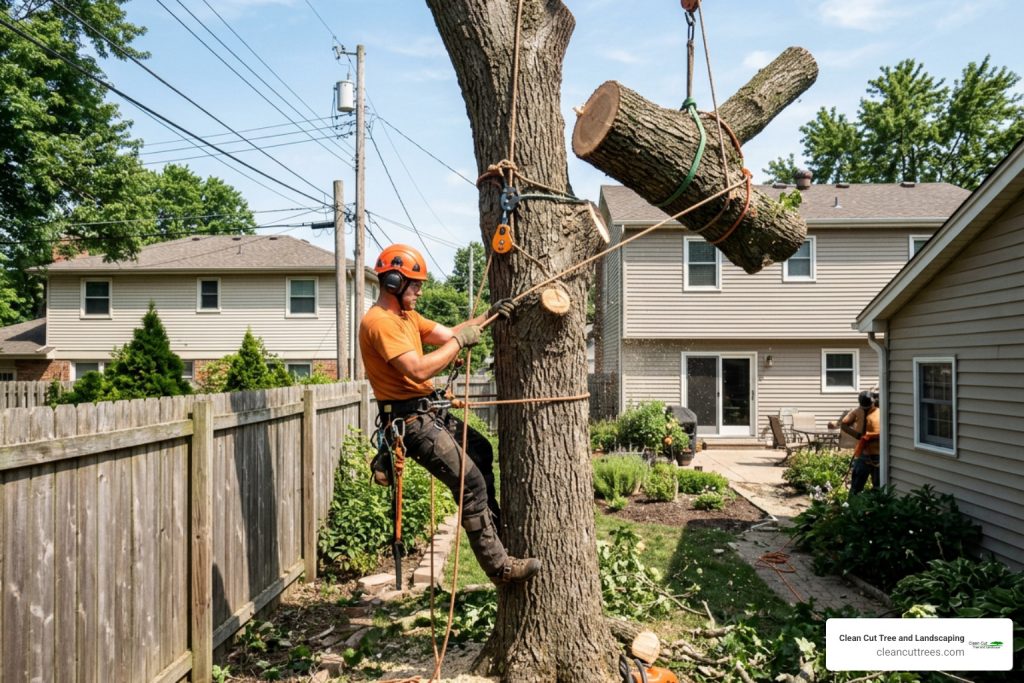
Understanding Sectional Tree Removal in Restricted Areas
When space is at a premium, conventional tree felling is off the table. Traditional felling requires an open, clear hazard zone—typically equal to at least twice the total height of the tree. In tight residential neighborhoods throughout Greater Cincinnati, backyards are often enclosed by fences, power lines, decks, and delicate flower beds. Drop zones are nonexistent. That is where sectional tree removal (also known as sectional dismantling) becomes indispensable.
Instead of letting gravity take over a massive stem in one dramatic crash, certified crews convert a high-risk scenario into a series of small, calculated actions. Every individual piece—from minor lateral branches to multi-ton trunk sections—is tied off, cut, and carefully lowered to a designated landing zone. By utilizing professional tree removal services, homeowners can eliminate hazardous trees without risking thousands of dollars in property damage.
Key Triggers for Choosing Dismantling Over Whole Tree Felling
Not every tree requires piece-by-piece dismantling, but structural and spatial red flags quickly make sectioning the only viable option. Among the top reasons remove tree property owners evaluate, structural instability and spatial constraints top the list:
- Proximity to Structures and Utilities: Trees overhanging roofs, power lines, or neighboring structures cannot be dropped whole. Controlled sectioning isolates each hazard.
- Severe Structural Decay or Rot: When heartwood or sapwood is compromised, a tree loses structural integrity. Hitting the ground whole can cause violent recoil or unpredictable direction shifts.
- Storm Damage and Split Trunks: Winter blizzards or summer thunderstorms can leave heavy split limbs hanging precariously (often called “widowmakers”). These require piecemeal removal to avoid sudden catastrophic failure.
- Restricted Access: When heavy equipment cannot enter a backyard without tearing down fence panels, crews rely on zero-impact rigging and hand-sectioning.
Permitting Requirements and Municipal Regulations
Before running a chainsaw, property owners must consider local municipal codes. Many urban and suburban municipalities enforce strict ordinances to protect the local urban forest.
For example, in cities with active Tree Protection Ordinances (such as Cambridge, MA), a Private Tree Removal Permit is required for removing any tree on private property with a trunk diameter of 8 inches or more measured at 4.5 feet above ground—known as Diameter at Breast Height (DBH). Similar local guidelines or HOA rules may apply in Midwestern communities, requiring site assessments, permits, or mandatory tree replacements. Cutting down protected trees without proper approval can lead to significant fines.
Essential Equipment and Dismantling Methodologies
Sectional dismantling relies on dynamic load management. Tree sections weigh hundreds—sometimes thousands—of pounds. Lowering them requires specialized tree-care rigging gear designed to handle tremendous shock loads.

Key tools used in professional sectional removal include:
- Arborist Rigging Lines: High-strength synthetic ropes designed specifically for heavy lowering and minimum elongation under load.
- Rigging Blocks and Pulleys: Heavy-duty blocks attached high in the tree to route lowering lines while minimizing friction on the tree trunk.
- Friction Brakes (Port-A-Wraps): Steel devices mounted at the base of the tree that allow a ground operator to control massive falling weights using simple friction.
- Personal Protective Equipment (PPE): Helmets, eye protection, chainsaw-resistant chaps, cut-resistant boots, and fall-arrest harnesses compliant with OSHA and ANSI Z133 standards.
Manual Sectional Tree Removal vs. Crane-Assisted Methods
There are two primary ways to execute sectional tree removal: manual climbing dismantling and crane-assisted dismantling.
Manual removal relies on an arborist climbing the tree using spurs and climbing lines (or using a bucket truck where access allows), cutting sections, and lowering them piece by piece using rigging lines.
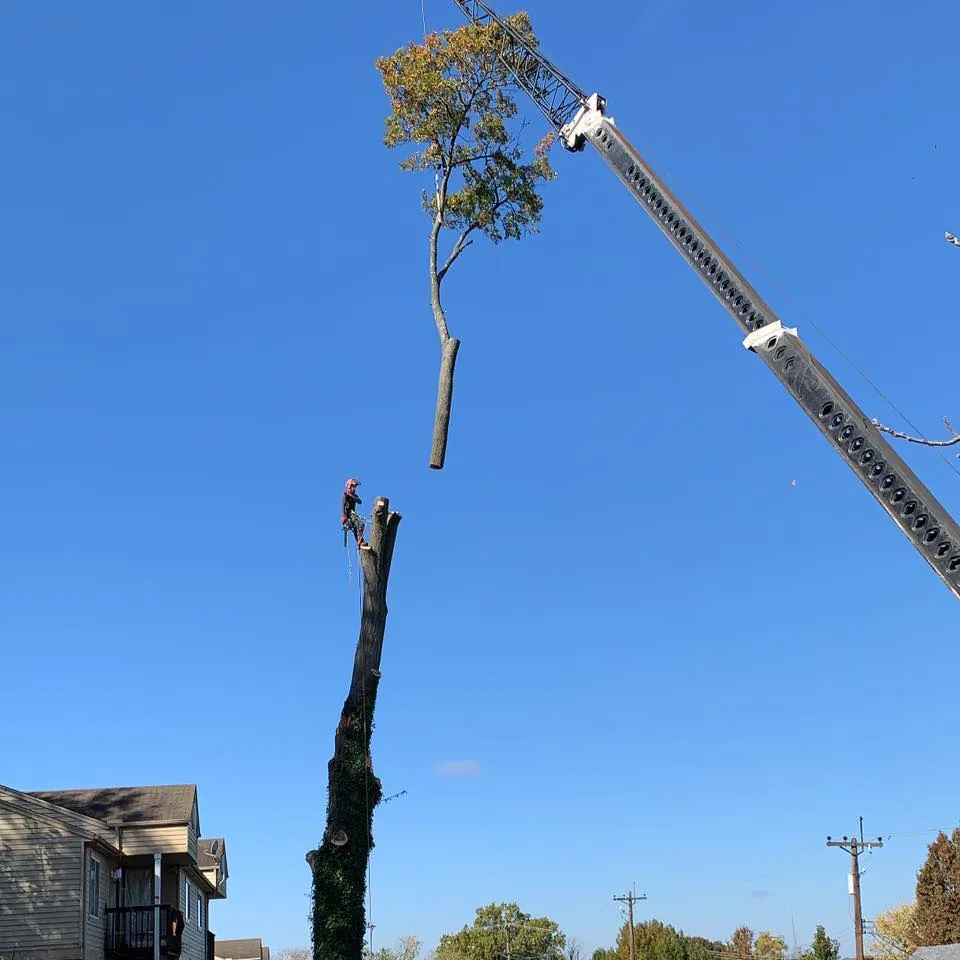
Crane-assisted removal introduces a crane that reaches directly over the house or obstacles. The crane attaches to the tree section before it is cut. Once cut, the crane lifts the piece vertically up and away, landing it safely in a street or staging area.
| Feature | Manual Sectional Removal | Crane-Assisted Sectional Removal |
|---|---|---|
| Primary Rigging | Ropes, blocks, and ground friction devices | Heavy-duty crane boom and winch cables |
| Structural Load on Tree | Tree must support climber and rigging forces | Crane carries the weight load completely |
| Ground Impact | High potential if pieces drop; mitigated by pads | Minimal; pieces lifted overhead to staging |
| Ideal Use Case | Accessible, structurally sound climbable trees | Dead, severely compromised, or inaccessible trees |
| Reach & Speed | Slower; dependent on manual roping limits | Faster; reach capability (up to 170 ft horizontal) |
| Typical Cost Range | Standard sectional labor rates | Higher equipment rate ($1,500 to $5,000+) |
How Homeowners Protect Landscaping and Structures
Homeowners often worry that heavy machinery or falling wood will ruin their lawns, flower beds, or concrete driveways. Professional arborists employ low-impact techniques to shield property during work:
- Ground Protection Pads: High-density polyethylene pads or heavy plywood sheets distribute weight and protect turf from heavy equipment tires.
- Crane Mats: Timber mats provide stable footing for large equipment while preventing driveway cracking.
- Rigging Control: Friction devices ensure lowered branches come down at a controlled crawl rather than a free fall.
Process Workflow and Post-Removal Clean Up
Safely taking down a mature tree in sections requires precision planning. Professional crews follow a step-by-step workflow to guarantee site safety from start to finish.
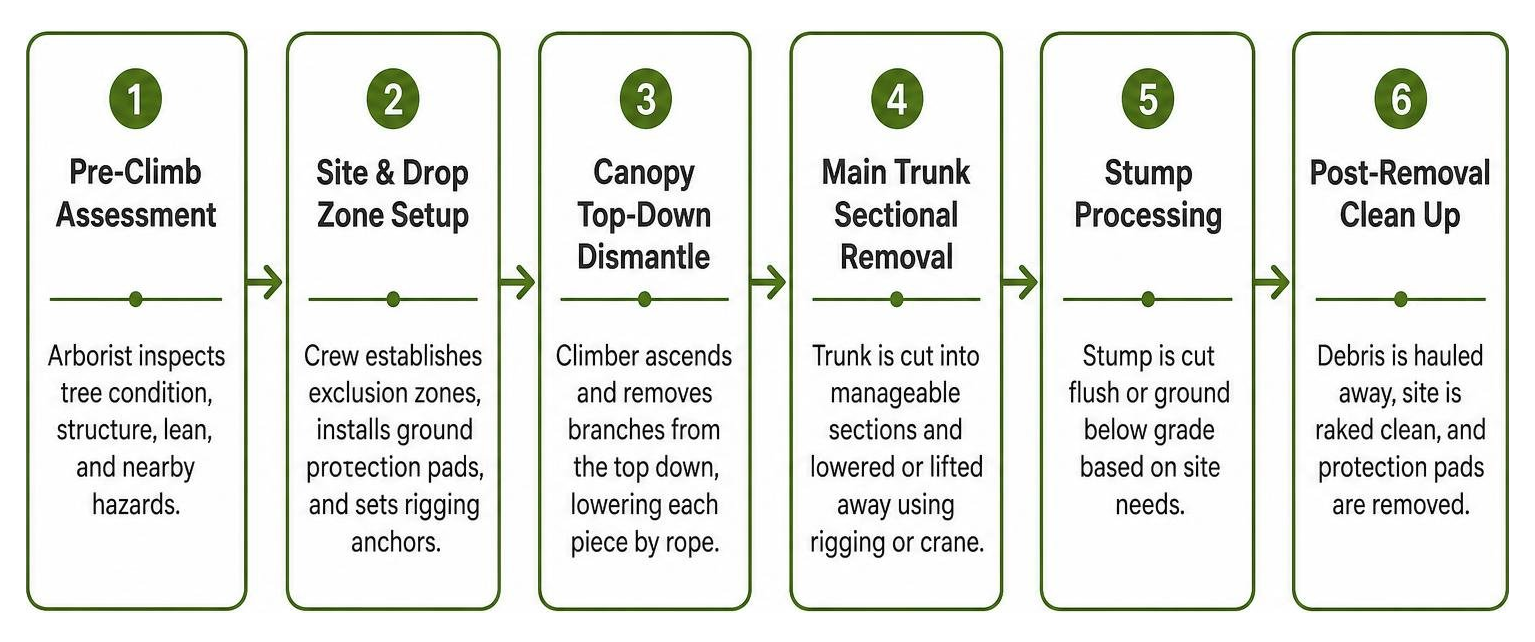
Operational Workflow for Sectional Tree Removal
- Pre-Climb Assessment: The arborist inspects the tree for structural rot, severe lean, cracks, and nearby hazards.
- Site & Drop Zone Setup: The ground crew marks exclusion zones, installs lawn protection pads, and sets up rigging anchor points.
- Canopy Top-Down Dismantle: The climber ascends into the crown, limbing lateral branches from the bottom up or top down, using ropes to guide pieces away from roofs and fences.
- Trunk Sectioning: Once the limbs are removed, the arborist cuts the remaining main trunk into manageable logs (“sticking” or “bucking” the spar), dropping or lowering them piece by piece.
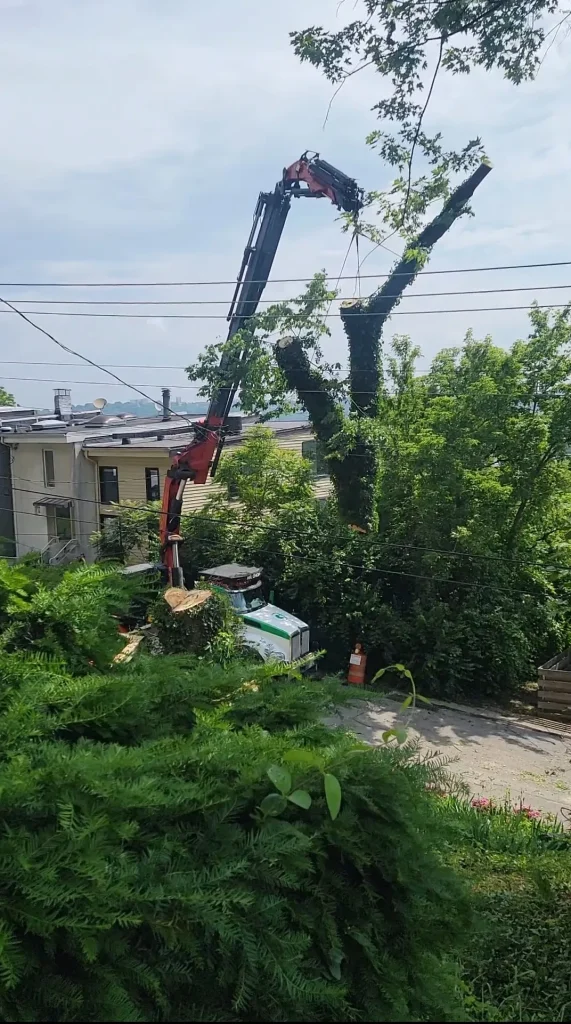
During summer months, elevated temperatures and dense foliage add extra physical demands. Maintaining strict safety protocols, as detailed in our guide on tree removal safety for the summer, ensures crews stay focused and vigilant throughout high-heat operations.
Debris Management, Wood Salvage, and Stump Removal
Once the tree is safely on the ground, the work is only half done. Comprehensive cleanup includes:
- Brush Chipping: Small branches and foliage are fed into commercial wood chippers to create fresh landscape mulch.
- Log Recycling: Heavy trunk logs are loaded onto trailers and hauled away to be processed into firewood, lumber, or industrial wood chips.
- Stump Grinding: Cutting a tree close to the ground leaves a stump that can harbor pests and create tripping hazards. Utilizing a professional stump grinding service grinds the root collar 6 to 12 inches below grade. Exploring different methods of stump removal helps homeowners decide whether grinding or total root extraction suits their landscaping plans.
Why DIY Hazards Outweigh Professional Hiring
Attempting DIY sectional tree removal is one of the most dangerous home projects a property owner can undertake. According to OSHA statistics, tree felling and elevated tree trimming carry higher risk than almost any other activity in the forestry and logging sectors.
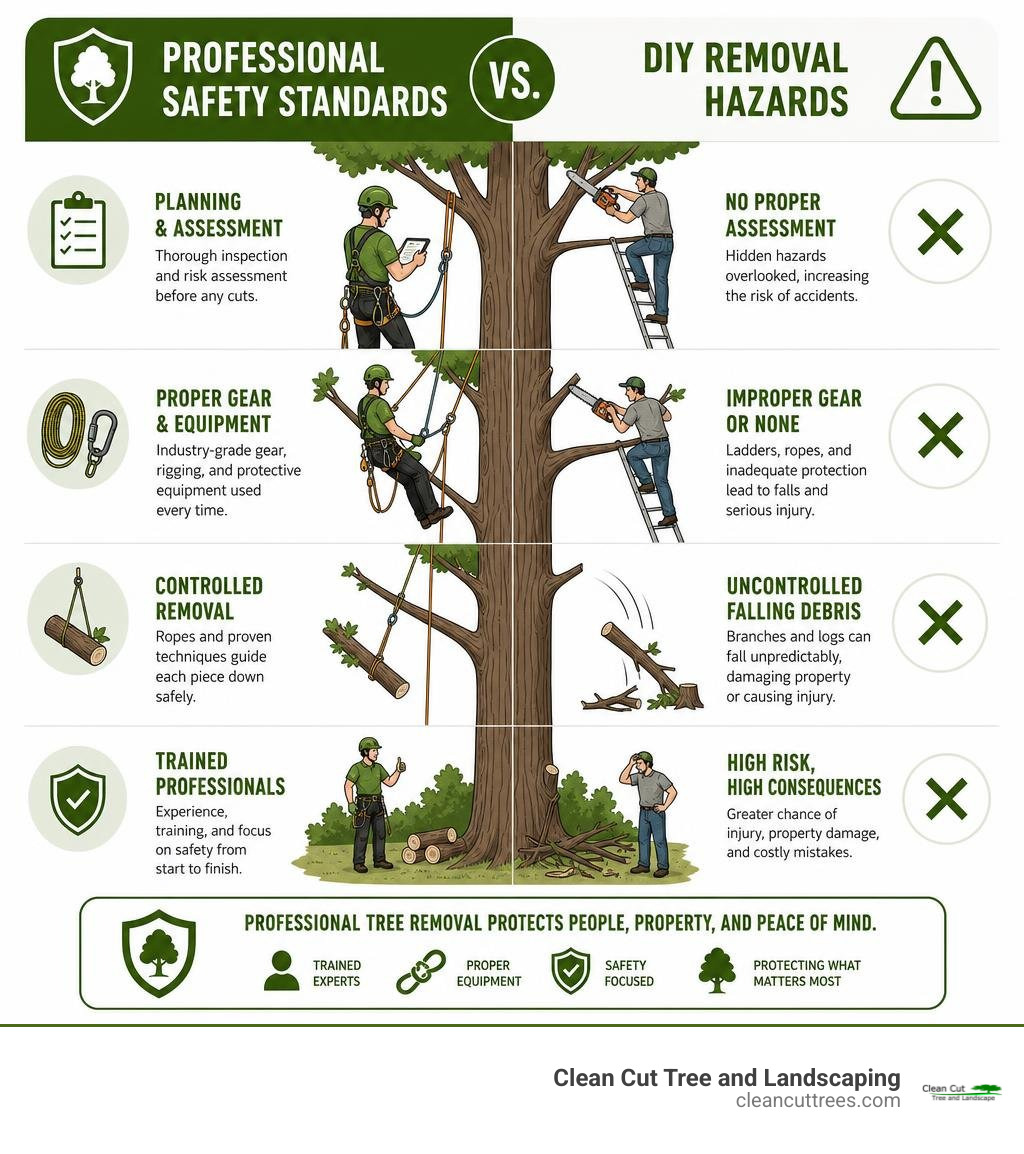
Unlike ground-level tasks, cutting high up in a canopy exposes untrained individuals to severe hazards:
- Chainsaw Kickback: Operating a saw above shoulder height or on a ladder increases the risk of kickback—where the saw tip hits wood at an angle, violently throwing the running blade backward toward the operator.
- Lack of Precision Notch Cutting: Standard felling requires a face cut depth of 20 to 30 percent of the tree’s diameter, followed by a level back cut leaving a precise 1-inch wooden hinge to guide the fall. In an elevated, awkward position, amateurs routinely miscalculate cuts, causing wood to barber-chair (split vertically) or drop unpredictably.
- Inability to Use Wedges Correctly: Plastic felling wedges are essential on trees over 10 inches in diameter to prevent the trunk weight from pinching the saw bar. Improper wedge placement at height can dislodge ladders or pinch equipment.
Understanding the severe risks involved highlights the main reasons shouldnt cut tree branches yourself. Reviewing 10 things need know hiring tree service will help ensure you choose an insured, fully equipped contractor.
Common Mistakes in Piecemeal Tree Cutting
- Ladder Instability: Securing ladders to rounded tree trunks without top ties leads to lateral slippage and catastrophic falls.
- Free-Falling Heavy Limbs: Allowing cut limbs to drop freely without rope control frequently damages roofs, gutters, and underground lines.
- Misjudging Wood Weight: Fresh, green wood is surprisingly heavy. Underrating section weights leads to snapped ropes or overloaded anchor points.
Frequently Asked Questions About Tree Sectioning
How much does sectional tree dismantling cost?
Costs vary based on tree height, trunk diameter, structural condition, equipment access, and proximity to hazards. While standard removals in the Midwest vary, crane-assisted tree removals across suburban regions generally range from $1,500 to $5,000+. Homeowners looking for options can learn how to save money on your tree removal project this winter when scheduling during off-peak seasons.
What is the primary difference between direct felling and sectioning?
Direct felling cuts a tree at its base, letting the entire trunk drop into an open space in one motion. Sectioning systematically dismantles the tree from the top down, cutting and lowering small pieces individually when open drop space is unavailable.
How do arborists prevent lawn and property damage?
Arborists use lowering ropes, friction brakes (like Port-A-Wraps), polyethylene ground mats, and overhead cranes to lower branches smoothly without allowing them to strike the ground or nearby structures.
Conclusion
When a dead, decaying, or storm-damaged tree threatens your property, attempting to drop it whole is often impossible—and trying to cut it down yourself is dangerous. Sectional tree removal provides a controlled, engineered solution to eliminate hazardous urban trees while protecting lawns, structures, and utility connections.
At Clean Cut Tree & Landscaping, our certified teams bring years of experience, specialized equipment, and low-impact techniques to homeowners across Greater Cincinnati. Whether you need rapid emergency response after a storm or want to learn whats an isa certified arborist and how our experts safely manage tight-space removals, we are here to help.
Ready to safely clear your property? Contact us today for a professional site evaluation and a free quote on our sectional tree dismantling services.