
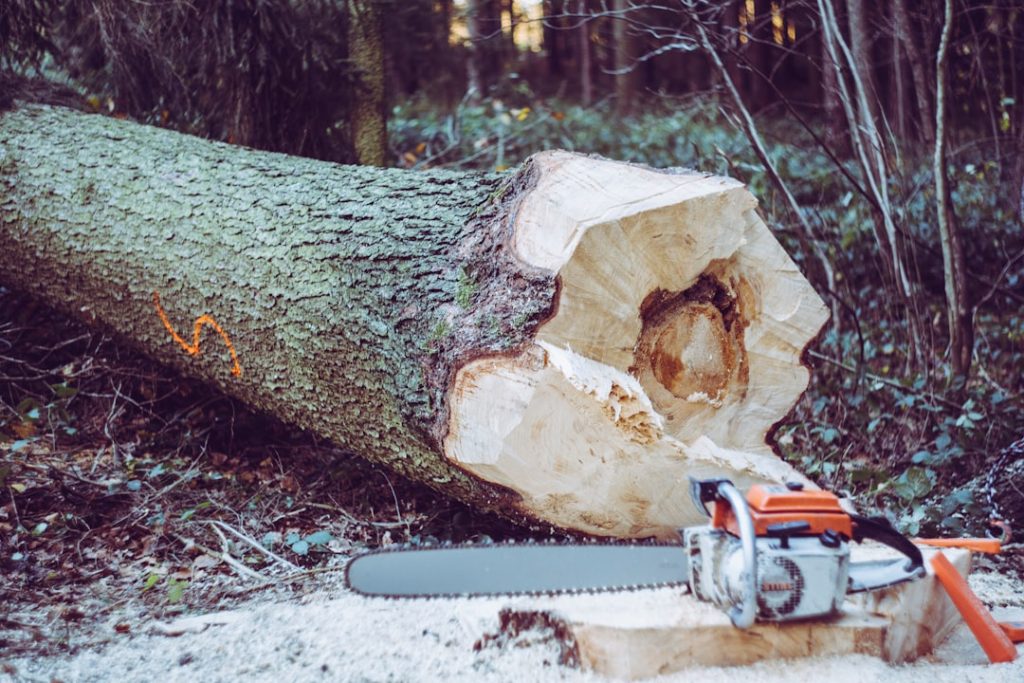
Key Reasons to Remove Overgrown or Dead Landscape Bushes
Managing a property requires balancing aesthetics, safety, and plant health. While healthy shrubs frame your property nicely, overgrown or dead vegetation creates visual chaos and physical hazards. When shrubs outgrow their intended space or succumb to disease, scheduling a professional bush removal service becomes necessary for long-term landscape management.
Overgrown bushes can crowd out surrounding flora, strip nutrients from the soil, block walkways, and cast unwanted shadows across lawn areas. Furthermore, dead or decaying woody plants become magnets for pests and fungi. Taking action early prevents minor yard issues from turning into major property hazards.
Improving Curb Appeal and Property Value
Your home’s front yard is the first impression visitors, neighbors, and potential buyers receive. Overgrown shrubs that obscure architectural details, cover windows, or hide house numbers severely drag down curb appeal. When thick foliage covers window frames, it deprives interior living spaces of natural light, making bedrooms and living areas feel dark and unwelcoming.
By removing sprawling foundation plantings, you immediately open up sightlines, restore visual balance to your facade, and create room for modern, lower-maintenance landscape elements. Restoring clean lines through proper landscaping maintenance can significantly enhance property value, offering one of the highest returns on investment prior to listing a house for sale.
Eliminating Structural and Pest Risks
Beyond visual appeal, neglected shrubs present hidden threats to your home’s structural integrity and overall safety:
- Foundation Encroachment: Expanding root networks push against foundation footings and exterior brickwork. As roots seek water, they exploit hairline cracks, exacerbating moisture issues and leading to costly structural leaks.
- Siding and Gutter Damage: Branches touching walls trap moisture against siding, promoting wood rot, paint peeling, and mold growth. Overhanging boughs dump heavy leaf litter into gutters, causing overflows.
- Pest Harboring: Dense foliage offers ideal shelter and nesting grounds for rodents, raccoons, snakes, and damaging insects like termites or carpenter ants near your living spaces.
- Storm and Fire Hazards: Dead, dry wood acts as fuel during fire seasons and can snap easily during winter storms, potentially damaging windows or utility infrastructure.
If overgrown vegetation has already damaged power wires, gutters, or access routes during severe weather, relying on prompt emergency tree services keeps your property protected and secure. Combining proactive bush removal with expert landscaping guarantees a safe, beautifully integrated yard layout.
What to Expect From a Professional Bush Removal Service
When you hire a professional bush removal service, you are paying for expert evaluation, specialized machinery, physical safety, and complete site cleanup. Trying to yank out mature shrubs with a pickup truck or a shovel often leads to damaged underground utility lines, wrecked lawns, severe physical back strain, or broken tools.
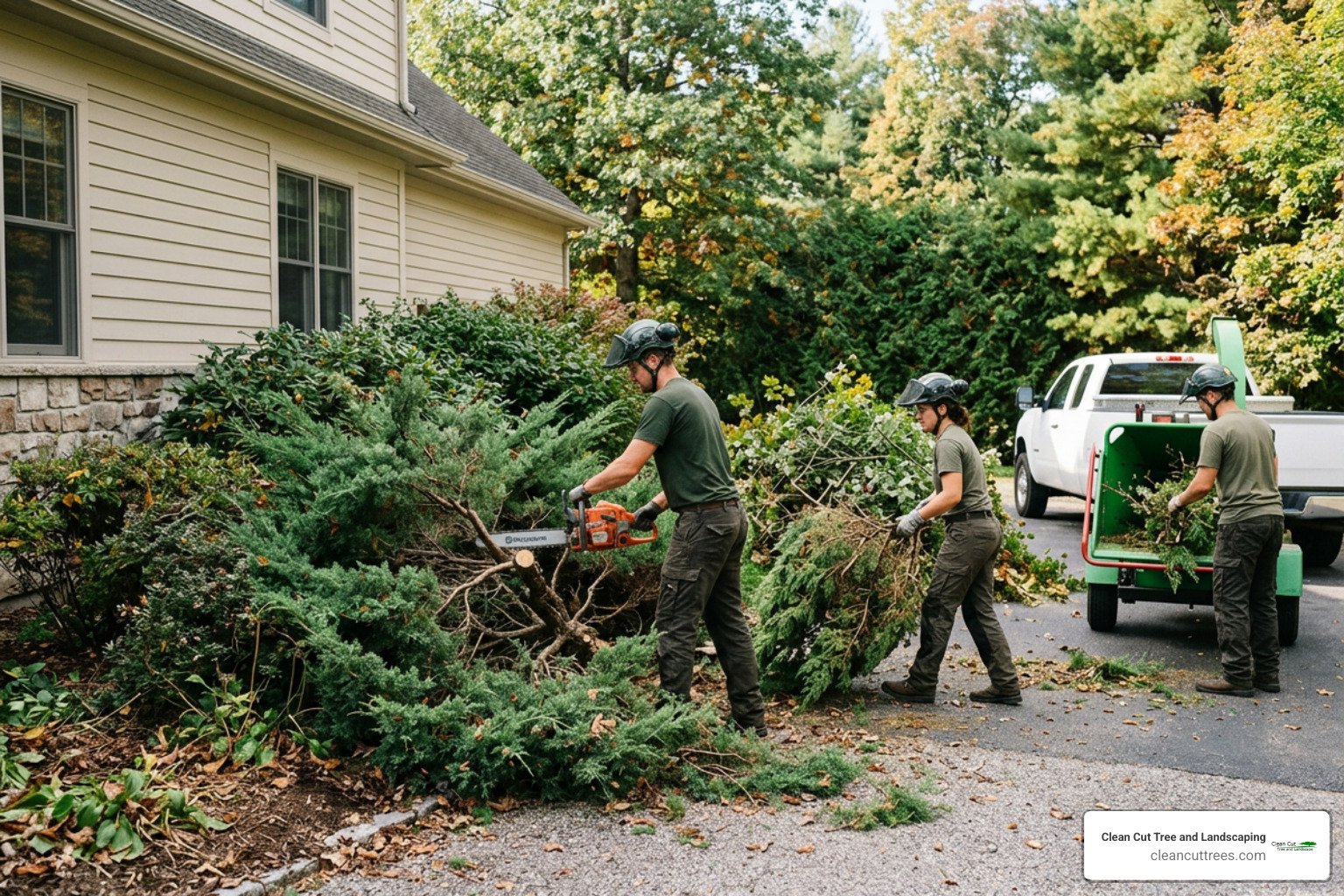
A professional team brings the training, insurance, and equipment necessary to extract shrubbery without disturbing surrounding turf, garden beds, or nearby home structures. From heavy brush clearing to precision hand-digging, we handle the dirty work while ensuring your site remains pristine.
If your yard requires comprehensive clearing beyond just a few shrubs, our dedicated land clearing services offer a full-scale solution for dense brush, unwanted saplings, and heavy overgrown vegetation.
Step-by-Step Process Used by a Bush Removal Service
To deliver predictable and safe results, professional shrub extraction follows a standardized operational sequence:
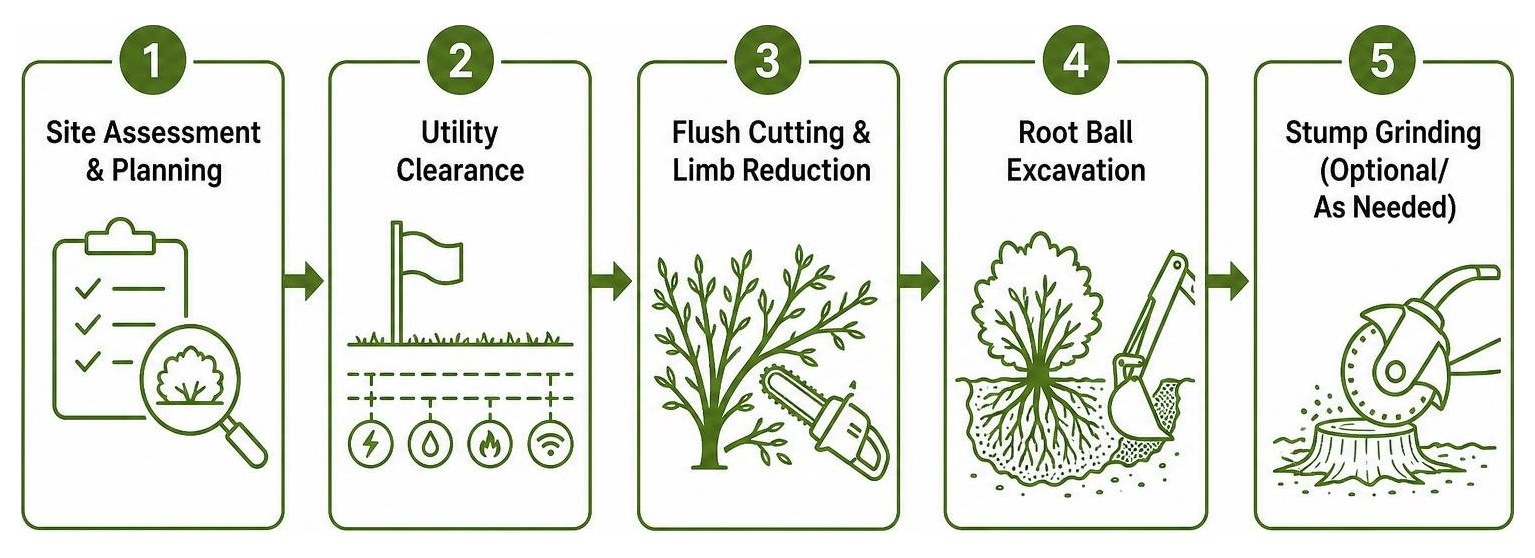
- Site Assessment & Planning: We inspect the target bushes, identify plant species, gauge root system complexity, evaluate access points, and note adjacent structures or desirable plants.
- Utility Clearance: Before driving any machinery or digging tools into the earth, underground gas, electric, water, and telecom lines are verified and marked.
- Flush Cutting & Limb Reduction: Technicians trim back upper branches using chainsaws or powered hedge trimmers to reduce bulk and allow safe access to the central stem and root crown.
- Root Ball Excavation: Using specialized root saws, spades, or mini excavators, the central root mass is severed from lateral roots and levered out of the ground.
- Stump Grinding (Optional/As Needed): If complete excavation would endanger nearby foundation footings, we flush-cut the main stem and grind the stump 6 to 8 inches below ground level.
- Debris Processing & Disposal: All brush is fed into a commercial wood chipper on-site or loaded onto haul-off trailers for responsible recycling and disposal.
- Backfilling & Grading: The remaining hole is filled with fresh topsoil, leveled, and smoothed out so it blends seamlessly into the surrounding turf or flowerbed.
For homeowners taking on major yard overhauls, understanding reclaiming overgrown property what to expect from land clearing helps in preparing your landscape for seamless transformation.
Professional Tools and Equipment Used by a Bush Removal Service
Extracting woody shrubs with deep root systems demands more than standard garden spades. Professional crews utilize heavy-duty equipment specifically tailored to different vegetation types and tight residential spaces:
- Mini Excavators & Compact Track Loaders: Essential for lifting massive 10 to 15-foot shrubs (such as decades-old junipers or yews) without tearing up surrounding turf.
- Commercial Brush Chippers: Process piles of thorny branches into fine organic mulch within minutes, eliminating the need for bulky haul-away piles.
- Mechanized Root Excavators & Saw Blades: Purpose-built cutting tools slice cleanly through thick lateral roots beneath the dirt surface.
- Hand Tools & Root Jacks: Heavy-duty digging bars, root axes, mattocks, and ratcheting hand tools allow precise extraction in tight quarters near house walls, delicate irrigation pipes, or low-voltage lighting wires.
Stump Grinding and Preventing Regrowth
Cutting a shrub down flush with the surface is only half the battle. Many resilient landscape species—such as boxwoods, privet, honeysuckle, and Siberian elm—will rapidly throw up aggressive sucker shoots from leftover root stock if the root system remains alive beneath the soil.
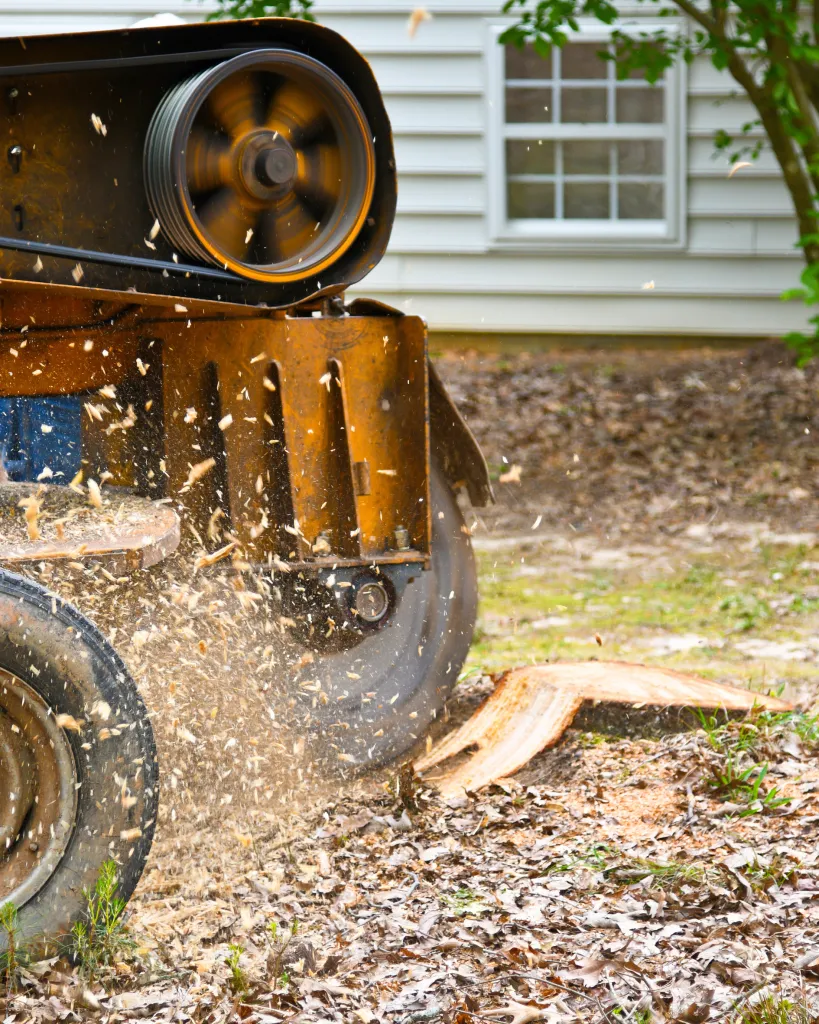
To guarantee permanent elimination, our team relies on professional stump removal services. Specialized stump grinders chew through hard stem wood down to 6–8 inches below grade. Once ground down, the cavity is backfilled with organic topsoil and graded smooth, stopping root respiration and completely blocking regrowth.
Understanding Bush Removal Cost Factors
When evaluating bush removal service costs, several key factors influence the overall estimate. While small border shrubs are quick and inexpensive to extract, established mature species require far more labor, specialized tools, and heavy lifting.
The primary elements affecting your project cost include:
- Plant Height and Width: Taller and wider bushes possess significantly larger wood mass and root systems.
- Root Depth and Complexity: Species with deep taproots or wide-spreading fibrous root balls take longer to dig out.
- Accessibility: Bushes situated behind fences, on steep slopes, or in tight courtyards require manual extraction rather than machine assistance.
- Quantity of Bushes: Removing multiple shrubs in a single visit yields lower per-bush prices due to shared crew setup and travel costs.
- Stump Grinding and Soil Restoration: Full root extraction or deep stump grinding adds equipment and topsoil backfilling expense.
- Debris Haul-Away: Chipping or hauling heavy wood waste incurs green-waste disposal fees.
| Bush Category | Average Size Range | Cost Per Plant | Root System & Removal Complexity |
|---|---|---|---|
| Small Shrub | Under 4 feet tall | $50 – $150 | Shallow, fibrous root system; quick manual or light-tool extraction. |
| Medium Bush | 4 – 8 feet tall | $150 – $400 | Moderate taproot and lateral spread; requires root cutting and levering. |
| Large / Mature Shrub | 8 – 15+ feet tall | $400 – $1,000+ | Deep, woody taproots (e.g., old Junipers/Yews); heavy machinery or stump grinding required. |
| Stump Grinding Add-On | Any size stump | $75 – $300 per stump | Mechanized grinding 6–8 inches below grade to eliminate regrowth. |
Pricing Breakdown by Shrub Size and Species
Plant species plays a crucial role in overall labor duration. For example, a 6-foot boxwood is comparatively light and easy to extract, whereas a mature 6-foot Pfitzer juniper develops sprawling, dense woody roots that anchor tenaciously into clay soil.
Invasive woody species—such as burning bush, Japanese barberry, and multiflora rose—often feature dense thorns or widespread root runners that complicate handling and require thorough excavation to ensure no root segments are left behind to sprout again.
Job Timeline and Utility Safety
Most standard residential bush removal jobs are surprisingly fast when handled by an experienced crew equipped with the right tools:
- Single Small-to-Medium Bush: 1 to 2 hours, including complete cleanup and topsoil grading.
- Multiple Large Foundation Shrubs: 4 to 8 hours (a full working day) for full excavation, stump grinding, and haul-away.
Prior to starting any excavation, safety protocols mandate contacting local utility services by contacting Call 811. Technicians mark the precise paths of buried natural gas lines, power cables, water pipes, and fiber-optic communication lines. When working within 18 to 24 inches of marked utilities, our crews switch to hand-digging techniques to protect your home’s infrastructure.
How to Hire the Right Local Bush Removal Service
Selecting a reliable landscape contractor ensures your project is completed safely, on budget, and without damaging your property. Because bush removal involves digging near house foundations and underground utilities, choosing a fully insured and licensed tree-care provider is essential.
When reviewing potential local contractors, keep these selection criteria in mind:
- Licensing and Insurance: Verify that the company carries comprehensive general liability insurance and active workers’ compensation coverage to protect you from liability in case of accidental property damage or worker injury.
- Verified Customer Reviews: Look for high rating trends across third-party review platforms focusing on timeliness, site cleanup, communication, and overall professionalism.
- Specialized Equipment: Ensure the company owns modern brush chippers, mini excavators, stump grinders, and turf-protection mats rather than relying on rental tools or manual labor alone.
- Transparent Written Estimates: Demand clear, itemized quotes outlining labor, root excavation, stump grinding, haul-away, and soil restoration up front.
Essential Questions to Ask Providers
Before signing an agreement with a bush removal service, ask these key questions to protect your investment:
- Does your estimate include complete root extraction or stump grinding, or just cutting the bush down flush?
- How do you protect my surrounding lawn, sprinkler heads, and garden beds from heavy machinery damage?
- Will you call 811 to mark buried utilities before starting excavation?
- Is complete debris hauling and yard rake-up included in the total price?
- Can you provide a backfill and soil grading option so the hole is ready for immediate replanting or re-seeding?
For property owners managing large-scale commercial grounds, partnering with a contractor experienced in commercial tree removal maintenance services guarantees your business frontage stays neat, clear, and compliant with municipal regulations.
Frequently Asked Questions About Bush Removal Services
What is the best time of year for bush removal?
The optimal window for bush removal is from fall through early spring (October through March). During this dormant season, plants have shed their leaves (making handling easier), root activity is low, and the ground is usually firm enough to prevent soil compaction from equipment. Additionally, removing bushes during dormancy minimizes disturbance to surrounding perennial flowerbeds and spring-blooming plants.
How do professionals keep bushes from growing back?
Professionals eliminate regrowth by combining thorough mechanical extraction with optional chemical treatments:
- Complete Root Excavation: Removing the entire central root mass and cutting major lateral roots stops the plant from generating energy.
- Deep Stump Grinding: Grinding the stem and root collar 6 to 8 inches below soil grade destroys dormant bud zones.
- Topsoil Backfill & Light Blocking: Filling the cavity with fresh topsoil and covering it with mulch or sod starves remaining root bits of sunlight.
- Targeted Herbicide Application: For exceptionally invasive or persistent species, an arborist-approved systemic treatment applied directly to fresh cuts prevents sucker shoots from forming.
Is bush removal safe near house foundations and underground utilities?
Yes, provided standard safety precautions are rigorously followed. When excavating near foundation walls, experienced professionals use narrow hand tools and specialized root saws to sever lateral roots without damaging footings or waterproofing membranes. Furthermore, calling 811 prior to digging ensures that buried electric, gas, water, and cable lines are clearly flagged, allowing crews to hand-dig carefully around utilities without interrupting your household services.
Transform Your Yard with Professional Bush Removal
Clearing out overgrown, dead, or diseased bushes is one of the single most effective steps you can take to reclaim outdoor living space, protect your foundation, restore natural light to your windows, and dramatically raise your property’s curb appeal. Whether you need a single stubborn juniper extracted or an entire row of overgrown foundation plantings cleared, hiring experienced professionals saves you time, backbreaking labor, and expensive property damage.
At Clean Cut Tree & Landscaping, our certified teams combine rapid emergency response with precision equipment to handle challenging plant removals safely and efficiently throughout Greater Cincinnati. Ready to unlock the true potential of your landscape? Contact our team today to schedule an on-site evaluation and get started with our expert tree removal service.